
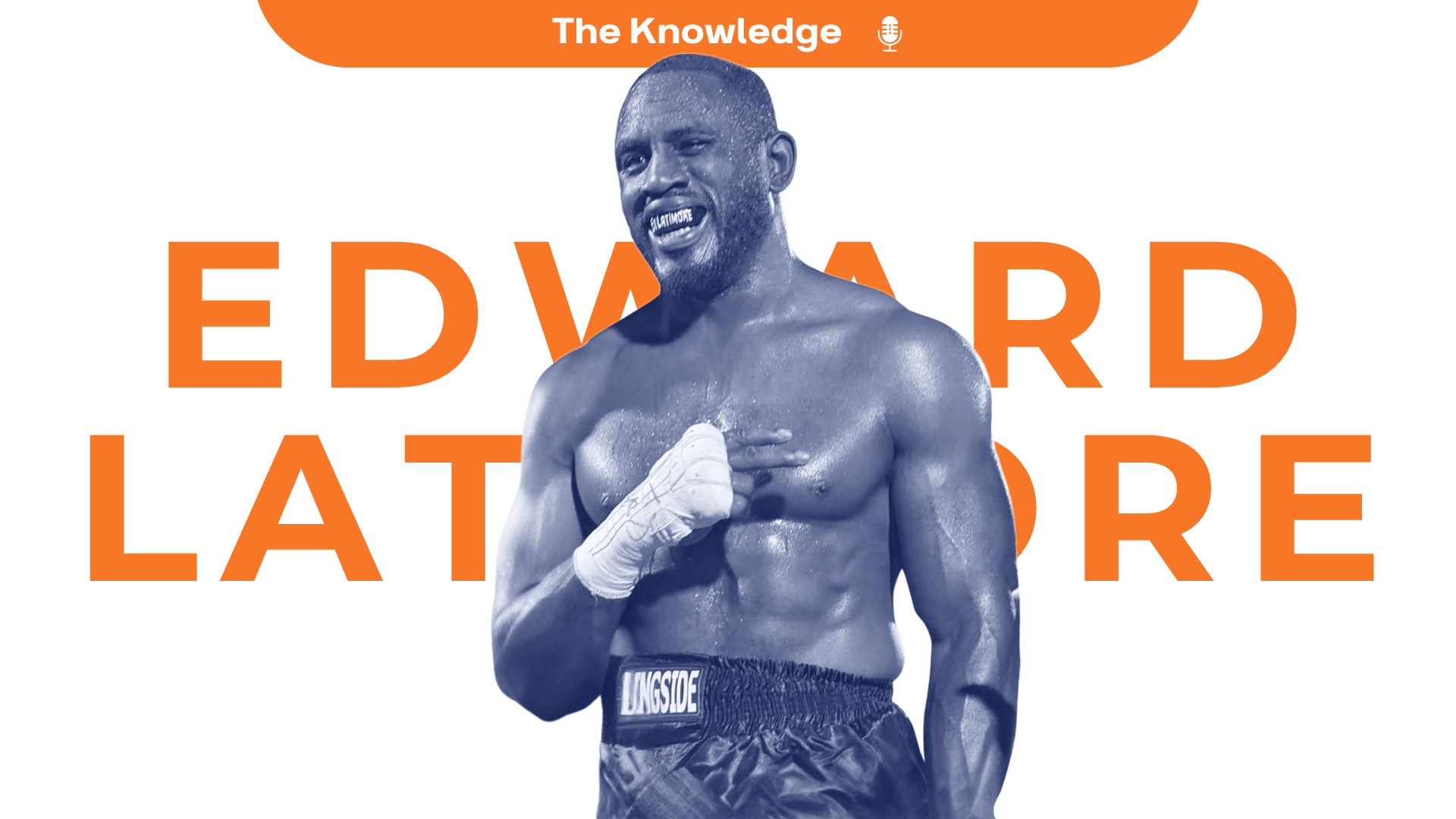
David Elikwu speaks with Ed Latimore, exploring his remarkable journey from growing up in the projects of Pittsburgh to becoming a professional heavyweight boxer. Latimore discusses overcoming challenges such as a tough upbringing, alcohol dependency, and setbacks in his boxing career.
Key highlights include his recent decision to come out of retirement at 40, his experiences with training and fighting, and his reflections on persistence and grit. Ed also delves into his new book, 'Hard Lessons from the Hurt Business,' and how boxing has shaped his life and mindset. The episode also touches on his academic pursuits in physics and his successful transition into writing and online business. Latimore's story is one of resilience and continual self-improvement, making for a compelling and inspiring discussion.
They talked about:
👴🏾 Coming out of retirement at 40
🥊 The making of a prize-fighter
😬 Navigating ego and fear
💡 Getting a physics degree later in life
🍺 Alcoholism and sobriety
🏡 Relationships and redemption
Listen to your favourite podcast player:


🎧 Listen on Spotify:
Watch on YouTube
📄 Show notes:
00:00 Introduction to Ed Latimore's Journey
00:59 Ed's Multifaceted Career and Sovereign Mindset
02:01 The Pursuit of a Singular Goal
02:51 Life Lessons from Poker and Persistence
07:54 Challenges and Triumphs in Ed's Life
11:02 The Comeback Fight and Sponsorship Insights
19:47 The Science and Mechanics of Boxing
25:59 Future Goals and Reflections on Boxing
37:08 The Unique Appeal of Boxing
38:48 The Decline of Boxing's Popularity
41:07 Personal Journey into Boxing
44:09 The Impact of Childhood on Ambition
45:22 Struggles and Turning Points
47:51 Boxing as a Lifeline
49:24 Facing Adversity and Finding Direction
52:25 The Reality of Pursuing Boxing
55:49 Maintaining Focus Amidst Challenges
57:59 The Highs and Lows of a Boxing Career
01:18:24 Struggles and Determination in Boxing
01:19:56 The Motivation Behind the Comebacks
01:20:58 The Role of Teaching and Tutoring
01:22:38 Injuries and the Decision to Continue
01:23:51 The Social Aspect of Boxing
01:27:55 Alcoholism and Social Connections
01:34:29 Pursuing a Physics Degree
01:37:43 The Rise of a Writing Career
01:39:56 Family Life and Personal Growth
01:46:18 Reflections and Future Plans
👤 Connect with Ed:
Website: https://edlatimore.com
Twitter: @EdLatimore
Book: https://edlatimore.com/hard-lessons-from-the-hurt-business/
👨🏾💻 About David Elikwu:
David Elikwu FRSA is a serial entrepreneur, strategist, and writer. David is the founder of The Knowledge, a platform helping people think deeper and work smarter.
🐣 Twitter: @Delikwu / @itstheknowledge
🌐 Website: https://www.davidelikwu.com
📽️ Youtube: https://www.youtube.com/davidelikwu
📸 Instagram: https://www.instagram.com/delikwu/
🕺 TikTok: https://www.tiktok.com/@delikwu
🎙️ Podcast: http://plnk.to/theknowledge
📖 My Book: https://becomesovereign.com
My Online Course
🖥️ Decision Hacker: http://www.decisionhacker.io/
Decision Hacker will help you hack your default patterns and become an intentional architect of your life. You’ll learn everything you need to transform your decisions, your habits, and your outcomes.
The Knowledge
📩 Newsletter: https://theknowledge.io
The Knowledge is a weekly newsletter for people who want to get more out of life. It's full of insights from psychology, philosophy, productivity, and business, all designed to make you more productive, creative, and decisive.
My Favourite Tools
🎞️ Descript: https://bit.ly/descript-de
📨 Convertkit: https://bit.ly/convertkit-de
🔰 NordVPN: https://bit.ly/nordvpn-de
💹 Nutmeg: http://bit.ly/nutmegde
🎧 Audible: https://bit.ly/audiblede
📜 Full transcript:
David Elikwu: [00:00:00] This week I'm sharing my conversation with my friend, Ed Latimore, who is, many of you might know, a former, perhaps heavyweight boxer who was until very recently retired. So that's a big part of what we start by talking about is.
He's come back out of retirement at age 40. He's had a really incredible journey from a tough upbringing in the projects of Pittsburgh going through various adventures and misadventures on this journey of becoming a professional boxer. We talk about everything that goes into that, the work, the efforts, the training, the fights, the friendships, the fear, all of the emotions and the physicality of this journey. Ed's got an amazing new book called Hard Lessons from the Hurt Business, where, much like a memoir. Talks about every part of his journey.
And so we unpack a lot of that and go deeper in some aspects. And so I think you are really gonna love this episode. I certainly had such a great time speaking with Ed.
Ed's Multifaceted Career and Sovereign Mindset
David Elikwu: [00:01:00] He's had such an incredible career, not least being a boxer, but going from there, He originally had gone to university, trying to play American football.
He went back to university while boxing, took a physics degree, became a physicist, you know, became a writer, built this great business writing online, doing a ton of things, And he really embodies, I mean, something I talk about in my upcoming book, sovereign, this idea of having, you know, a, a sovereign mindset and being willing and able to transcend the situation that you find yourself in.
I think growing up where he grew up and being in the situation he was in, it could be very easy to. Give up to lose hope, to not even find hope in the first place. But the fact that he was able to keep pushing and it, it's one of the questions that I ask him, but you, especially if you read his book, it, it's a great book.
Um, you see him having this dogged pursuit of this one thing. There are ups and downs. There is to malts. There are all kinds of things that happened to him in [00:02:00] his life, but he. Constantly pursues this one thing through alcohol dependence, through broken relationships, through everything that he went through, he.
Did everything in his power and eventually became the number four boxer in America, which is incredible, number four in the nation. Um, but you know, there were highs. There were also lows, and you're gonna hear him talking a lot about this. So this was a really great episode, if you love it. You can find the show notes, the transcripts, and my newsletter at theknowledge.io.
I'll leave the link to his book Hard Lessons from the Heart Business in the show notes and description below. So please check that out. And if you love this episode, please do share it with a friend because it helps us tremendously to find other listeners just like you.
Ed Latimore: I can't sit and play poker. I couldn't before I had responsibilities and I definitely couldn't now. But I, I like [00:03:00] the general setup of the game and really the concept of, of house advantage or, or, um, expected value over time. Because what, what it tells you is that if you continue to do the right things, even if it's, uh, when I say right, I mean the thing that is optimal for what you're trying to accomplish, um, if you continue to do those things, once you identify them and you do them over time, even if you have small bumps, the outcome should be in your favor. you should move closer. I, you know, worst ca the worst case scenario is, you know, you ever hear that old saying, shoot for the moon, even if you don't, or, or shoot for the stars, even if you don't, you know, get there. You land to the moon or, or vice versa. Shoot for the moon and you. Don't get there. You land in the stars.
But that's the idea. Even if you don't reach exactly what you're trying to do, you've put things in motion that are going to, uh, your, your [00:04:00] experience and, and open up a lot of things for you.
David Elikwu: Yeah, it makes sense. And it's funny you mentioned poker. It's actually made me think something that I think it makes sense intuitively when, when you say it, but I don't think I'd thought of it specifically this way, is the way in which poker is incredibly honest, like a lot more honest to real life than most other domains in the sense that it starts by acknowledging upfront that there is an element of luck
right there.
There is one, there's a house advantage. Two, the hands that are dealt are random. Right? But then you, that's the beginning. And life is the same way, right? You can't control the hands that you're dealt in life. Some people are born, you know, you, you might have grown up in the project, someone else grew up in a very nice middle class home.
That part you can't control. That's just gonna happen. And then everything else that happens in a game of Foca happens after that point, right? Nobody thinks of Foca just as the, the dealer dealing the cards that's taken as a given. That's the starting point. And then everything else from there is, okay, [00:05:00] how quickly can you figure out what kind of card do you have and what kind of cards everyone else has?
How quickly can you figure out, you know, where you have an advantage and where you don't, you know, think what you might wanna sacrifice, what you might want to give up, how you can stop building an advantage to, to get into a good position, right? Because even the world class poker players, everyone just gets a random set of cards at the start and they have to start from there.
So I think there is that universality where. Everyone does have a random starting point. You are also not starting at an advantage. The house always has the advantage in most gambling games, but there is this acknowledgement that, okay, from that starting point, you have to build your advantage from there.
The Concept of Persistence and Grit
David Elikwu: And I guess maybe another part that I'll add to that, unless you had something to add, is just the idea of persistence, I think as well, which happens both with podcasting and a lot of other things. And this idea that really over time, I think one of the biggest differentiations, like you mentioned with, you know, people that start a [00:06:00] podcast or start something else, is that people just don't continue, right?
People do, uh, however many episodes and then life gets in the way or they give up or they get tired or realize it was more effort than they
had originally assumed.
Ed Latimore: you, you have to, that that commitment, you, it, it's almost gotta be delusional. The book, um, grit. about this
David Elikwu: Yes. Yeah.
Ed Latimore: that, you know, what, what's the thing that separated the ones who succeeded? Because the story behind the book, uh, Grit by Angela Duckworth, the, I, I guess the book started as a study into West Point Cadets who, and, you know, trying to predict which ones would go on to graduate and which ones would kind of fail out. And looking at all the metrics, it wasn't, you know, there, there's a heavy physical component because there's, there are the military officers, that didn't predict. And then [00:07:00] there's the intellectual component that didn't predict it. But what did predict it was this, this idea of grit. And if you wanna define grit, you would say something along the lines of, and I'm paraphrasing, I think in my book, she, she the exact wording, but it's the ability to persist towards your goal. In the face of setback. And that is something that I think a lot of people, I would, I would mean, I can't put a number on it, but just judging my by, by my experience and things I've seen in different domains, that's something that is a, a lot of people just, just can't do, you know, one setback and that's it, you know?
And, and look, I'm, I'm not saying it's a, um, a psychological failing it. Sometimes things legitimately come up, but it's, you know, how badly do you [00:08:00] want to, here, here's a just a, an example from my personal life.
Challenges of Writing and Training
Ed Latimore: Two, really. I mean, uh, this pa the past two years have been hard. They've been hard, but they, well, well first, you know, why have they been hard?
The book and training to fight again and training to fight again at, at an older age. But, why are they, why are they hard? Well, first, you know, I, I put myself in a position to even be able to do those by consistently showing up online with the writing and, and growing the brand for 10 years. And then I get a book contract and all of a sudden I gotta jump to the next level. And writing this book and writing a book is easy, was hard, is writing a book. When you got a, when you got a, um, he was an infant then, he was a, well, he was a newborn when I first got the contract. Uh, and then he was an infant. And, and kids, they man, they don't understand what the circadian rhythm is or they don't respect it and they just wake up. And so you gotta, you gotta [00:09:00] be awake and so you're tired. That affects your thinking. And you have to write while you're tired, is hard, but you have, but I have to do it right. Uh, and not a book is done. And I feel great about that. And it was the kind of a similar challenge with, with getting ready for the fight recently and that. Unlike before when I was training to fight or when I was fighting, uh, I could just go to the gym and I could spend hours there. Now I can't do that. Now. Not only do I have, you know, other things to do with the said book, but I got, I got the family, I gotta come home. Um, my wife, you know, works for herself too, so she's home, but, but she works for herself.
She's not, she's not like a pure stay at home, just chilling. gotta get stuff done. And, you know, I had to rely on my sister. And then we, we had a, we have a babysitter that comes, but I had to get in the gym [00:10:00] consistently three to four days a week. Otherwise I wouldn't be able to do it. And then it would just be a waste of my time.
I'd go out there and get hurt because nobody plays boxing. And that's, um, it would've been, there were, there were multiple points I thought to myself, this, this is stupid. This is a bad idea. is a waste of time. This is hard. Um, not, not, the training is not hard, but, but coordinating everything. But you figure it out. You keep going. And, and a funny thing happens when you keep going. You, you figure out like things along the way. You learn things along the way, but you can't learn any other way. Like, like there ain't no way, shape, some of the things I figured out about marketing reaching out to myself, reaching out for myself and writing. I would not have learned those if, if this situation was ideal, for example.
David Elikwu: [00:11:00] Yeah, I think.
The Comeback Fight and Sponsorship Insights
David Elikwu: Even just on this topic of persistence, this is one thing I wanna ask you, and just to set the stage very quickly, for anyone listening to this that doesn't know your background, we'll, we'll dive into a lot of these things more in depth. But the, the short version is something along the lines of, you know, you grew up in the, the projects, you had a very tough upbringing.
You managed to carve a, a small opportunities for yourself as an amateur boxer. At one point, you know, on the ascent, you reached the national number four ranking. So, you know, the fourth best heavyweight in, in the us or at least at the, the ranking at that time. And you go on from there. Eventually you were represented by Rock Nation, et cetera, et cetera.
But. Then you retired, and this is a long time ago. And, and so now you're coming back to a fight at age 40. And so this is the, the persistence part. And I really wanna ask you, I, I know you wrote a, a post about it, and I, I did read that, but a lot of people listening to this would not have, you know, considering, okay, you have had [00:12:00] in some aspects, maybe the traditional okay, coming up journey when you were younger and then you took this break, you've now had a family.
Usually that, that part of the story makes sense to a lot of people, right? Okay, fine. You finished your fighting career, you retire, you, you start a family, you get your cat, you have your child, all these things. But now going back to fighting, like what's, what's going on there?
Ed Latimore: Um, a, a few things and, and I think, like you said in the post I, I, I said, look, one of these things by themself, enough. Really. Two, not enough because it's a heavy investment. a, it's a, he. Well, well, okay, that's actually a great place to start. Heavy investment. That's, that's one of the reasons consciously or unconsciously, everybody gets into fighting, which is they think that it will lead to something better down the road, whatever that, something better is, [00:13:00] depends on each person. Oh, and whether it's ever actually realized also depends on a lot. I'm wondering. It's not as simple as, especially now, you know, when I, further back you owe to more, it was as simple as fight, you win, you get accolades, money, whatever. Now, you know, with with, with social media and the internet, if, if you are, if you got half a brain, should be able to make, um, decent enough living, just fighting. But, but you know what I'm, what I'm learning, I'm thinking about starting this as a company, I gotta kind of figure this out, is that fighters have zero concept of sponsorship. It's, it is just not their brain. I, I am, I am shocked at how many guys. Not only, don't either. Don't do it. There, there, there are multiple problems.
And, and that's where we'll get, get to the answer, uh, to the initial question. But, but it, [00:14:00] it, it kind of relates here. Uh, there are multiple problems in the fighter sponsorship game. One being that fighters don't understand that they are a brand. Musicians seem to get the, an artist in general seem to understand this intuitively, if they resist it in terms of the labeling, they seem to get that they are, that the part of the reason their art sell is that they get that.
Um, I wonder if it's just built into the culture of, of the artist. I'm, I'm a writer and I wouldn't consider, I mean, I guess that is an art, art form and I, and maybe that's why I get it. Right. So they don't get that. They don't understand and, and because of that, they don't realize that there is' an active outreach process. That goes on. And you gotta kind of think, where do I best align and who, and then who will gimme the most money? and how do I ask for that money? And then on top of that, [00:15:00] how do I make sure they wanna work with me? Kind of circling back to the brand thing, but that, that, that, um, all of that to say that's actually a cool place to start even though it's the one place I never start when I this answer. There are just more opportunities now for, for, um, boxers, in general. But, but in my discipline, boxing, there are so many more. It, it's crazy for this fight here. Just, just to put this into perspective, um, if you want to count the monies that I received because I was fighting, not, not because I had the brand little book, but 'cause I was fighting, um, this was a five figure. I ain't never made five figures fighting. Never. And then, and on top of that, I didn't get a purse. I did this for free because I knew, uh, what it could bring me. So I did this for [00:16:00] free, but I, in sponsorship dollars, for myself generated, uh, like 12 grand then with some other sponsorship stuff that just kind of, you know, God's the one to support the fight with their company or whatever, get, you know, that they bought tickets and that went to offsetting the opponents first. Things like that. So, so, you know, the opportunity is there and I just figure I'm at, I'm at a really perfect alignment where I'm in great shape. I've got this great brand that I've built online, this awareness, um, and. You know, if your company comes and, and partners with me, you're gonna get the exposure. Plus I'm gonna make, not a bad person to get behind. You know, there are some guys, this is the brand part, you know, you got a lot of fighters, but like, these, these, you know, saying weird stuff or doing weird stuff online or not understanding that, it's cool [00:17:00] that you fight, but who else are you? And you know, your IG shouldn't just be fight picks and stuff like that. that's one reason. Now let's get into like the, the, the big meat and potatoes of it. Uh, number one, uh, which I guess is related to this is that I've got the book coming out. Hard Lessons from the her Business Boxing and the Art of Life. Boxing's in the title, both directly, uh, boxing and then, and it's, and it's moniker the her business. And for those who don't know, I, I took a poll on Twitter and found out most people don't, and this is my audience. Uh, most people don't know that the her business is a moniker for. Uh, boxing. So there's that. But, okay, so I said, that's there. This is the memoir. This is my life. What a great way to, to build a story behind this.
If I continue, if I get back in the ring when I was doing research for comparable titles, which you have to do for a book proposal, uh, when I was looking for comparable titles, there were only [00:18:00] like, well, well first there was one book that I really loved and that was sort of a motivation. That's the Art of Learning by Josh Weitz Skin.
That's about chess. Alright. And then the other book that just no matter where I turned it kept coming back to this was David Goggins Can't Hurt Me. And of the notable things about Goggins book is he's still believing what he does and what he says. You know, what the, what the kind of redemption arc in the book is, which is the running. Everyone knows that he's the, the, the military guy, but you read can't hurt me. And it's the running. That was really the, the main redemption. Pulled him through stuff, moved everything in the book. And I said, okay, if I'm gonna do this, I gotta do this this way because I'm, I'm realistic. I know that, uh, I boxed [00:19:00] past tense, okay. book's coming out and I think the book will perform suboptimally if I was not in the break. 'cause it's not like I was super famous or anything like that. I've got, I've got like CT internet fame, but crazy. So I said, let me go do this. Let me try this out. All right. So that's one.
Boxing Mechanics and Coaching Philosophy
Ed Latimore: Number two is I, um, I spent like the two past three years. Like a three year period, two to three year period, doing some part-time coaching. And during that coaching, I wanted to make sure everything I said like solid and would stand up in a, in a quarter of boxing. Right? here's the problem with boxing.
Everyone thinks their way is better. One, two, there's, there's not the, the academic rigor study applied to the sport the way [00:20:00] there is in the other sports. So, and, and that's largely a function of, you know, one. Boxing has got like no regulatory, you know, no regulation or standard at, at the initial level.
Like, like anyone, literally, I've seen this several times, can basically throw a towel over their shoulder and become a boxing coach. you got guys that never did anything as an amateur and never had a, a pro career of any significance. And they come and coach, like, they don't know what they like, like, like by the outcome of their careers, they don't know what they're doing, right?
Like, we can, we can say that definitively, but this, this culture and this mindset persisted the entire sport. So as a result, there's not a lot of people who, but like, there's no standardization of what works and what doesn't. can't even get guys like, like I've, I've watched fights with guys and they're, they're, um, are, are trying to predict outcomes of fights with guys and they think it's gonna go one way.
So many. And I'm just like, what are you guys looking [00:21:00] at? Are we looking at the same thing? Um. Now, partly that's my experience. But the other part related to this coaching is I went and really started to study the, the biomechanics and I, and really study life. Like I bought this book, this is $150 textbook fundamentals of, of, uh, biomechanics and sport and exercise.
So I did all this, studying the fighters who I recognized had proper mechanics and learning the learning, taking notes, taking notes. Fortunately, I have a really good coach too, who has been exposed to a lot and he's like a hall of fame coach. so I went and I realized, okay, this is how, and I couldn't do this before.
I didn't have this base knowledge of how to move my hips and, and make, uh, make adjustments in, in the ring. I, I, I, I didn't know what I was doing in that sense. [00:22:00] Now I do. And so everything that gets tied can be put on. So I think, um, I'm going to do well and I want to test it because I don't wanna argue with guys about what should work, what shouldn't work.
Most, most people in boxing, they don't have the, science understanding of what I'm saying and what to look for. I, you know, I, I, using the words they wouldn't know the, the terminology just wouldn't be there. So, and I'm not interested in arguing. I'm interested in testing this with me. So let's see how this goes. And then here's the next part. I spent my entire career at heavyweight, even this last comeback fight was heavyweight. Uh, and I won. And I won in a, in a, in a dominating fashion. But let me tell you, um. I weighed in that 215 pounds. I'm only six one and only six one people say, I'm like, nah, you gotta [00:23:00] understand. The average height in the heavyweight division is six four. And that's like skewed to the left. Most of them dudes, uh, are six horn taller. I've multiple times five guys, 6, 5, 6, 6, who outweighed me about to 40 pounds. Not doing that no more. Smaller. Uh, I'm just going to drop the weight. I, I would've done it for this fight.
But because of the way things worked out with the matchmaking and the other, uh, responsibility that I had leading up to the fight, I was like, you know what? I'm not gonna put myself to the stress of, of worrying about one more thing coming back. Let me just get back in the ring and get comfortable. So I came in at two 15.
My opponent actually weighed at 258 pounds. like, well, I remember that first clinch. I was like, yo, these, this dude is strong. probably stronger than me and I'm not like a weak guy whatsoever. But he's just got like, what is 50, 58 15? He's got [00:24:00] 30, 33 pounds on me. I'm not trying to with that. 30. Yeah. So there we go. And I actually think my math was wrong on that. 30, 30, 30 15, 15, 30, 45. That's 40. He got 43 pounds. Me, my bad. So like that. So I'm not, not trying to do that. And he, and he was well put together and he wasn't like super rip, but he, he had a, he had a tip heavyweight shape. If, if you're familiar with boxing at all, if was built like David too, that kind of guy.
David Elikwu: Yeah.
Ed Latimore: I'm gonna drop the cruiser where I won't have weight disadvantage. Uh, or if I do have it, it'll be like pounds on fight night. But we all, we, we both gotta be 200 or the fight can happen. And I, I don't wanna wonder what if, you know, I've always wondered what would've happened if I had the time to learn what I managed to figure out in the eight year interim without losing, right.
That, that's [00:25:00] the key. Like, like tons of guys will learn the game, but they'll learn it taking losses. And I just, I was like, that, that's dumb because I know enough about the business to know that, you know, one loss is already kind of terrible, but, um, but it's okay 'cause it's one loss. But, but if it was like two or three, whatever, but like, no, this time like I can come in and maybe get one more fight and really be fast track. that's gonna work with the rest of my goals of, of solar copies, getting press and building up the rest of what I want to build up. Uh, which my focus over the next year is gonna be doing a lot more, uh, speaking because people, uh, paid me to speak. I'm not bad at it. I enjoy it. So let me leverage all of the resources I have, the brands I have, the connections I have, try and get more.
And this is just a good way to really put some gasoline on the fire. So, so all of that is why I'm boxing again, I, for you.
David Elikwu: Yeah, that makes sense.
Future Goals and Reflections on Boxing
David Elikwu: I [00:26:00] just to focus on the last part of what you're trying to get out of it, I'd be interested to know like how long you think you would box for now or if there's a particular goal that you have in mind. And I say this because another part that I'm interested in, and maybe you can speak about this more broadly, is the psyche of boxes, the psyche of fighters, like what goes into it and what the motivation is at different points.
Because I think there can be distinctions, right? And I think you've touched on this in, in the past a little bit as well, because I think that for one. Just at the starting point, there's the motivation of it. Why would you start boxing in the first place? Sometimes maybe it's just 'cause you're poor. Like why?
Why would you go into something where in the US almost any other sport apart from, I don't know, maybe lacrosse or something, you can get paid more if you go, if, especially considering you have to be quite tall. You have to be quite strong if you have those attributes. You could play basketball, you could play American football, you could play baseball, you could do it something else and get paid more even at an amateur level.
So you have that starting [00:27:00] point of, okay, what kind of what? What is the psyche and the motivation behind going into boxing in the first place? Then you have, okay, going into each fight, there is this thought maybe that. As a professional or as an athlete, it's then about, okay, what if I lose this fight?
Which fight should I take? Do I, how do I think about my career? How do I think about my longevity here? Um, just from a professional perspective. And then I think the final aspect of it is then, okay, you've been doing it for a while, and then it's. The, the permanence, like boxing specifically and, and fighting specifically.
It's not the same as other sports where you just think, okay, this is another loss in my loss column. Like a loss. Even a win could leave you severely injured. It could have long-term impacts. And so I think there were all these factors that people think about. You see some boxes where maybe they didn't retire early enough or, or [00:28:00] they went on too long.
I think even Ali, with his trainer, there were people that said he should have retired much earlier. And so I think there's that aspect of it as well, especially if you're not, you're no longer, let's say fighting for money or something. It's figuring out, okay, when, how long is enough or, or how much is enough.
I'd be interested to know what your thoughts are on that.
Ed Latimore: so, so my particular situation, you know, kind of how long or how far I will. In an ideal world, the decision will be made for me on a positive note. 'cause I'll simply have too much other things or too many other opportunities going on. And I won't really, um, need to, need is, is a strong verb here, but that's probably the best one. Um, you know, with that said, what's, what's really enjoyable and I have to be careful and know myself. You know, what's really enjoyable? I, I wasn't expecting people to be inspired by this. I was, I very much, this was a selfish [00:29:00] act. I'm, I'm going out for me. Um, but, but it's had a very interesting response. Um, a lot of people were like, wow, I didn't, you know, think that was possible. That's cool. I went to some fights the other night locally. This is not just online locally, the, you know, a lot of guys in the boxing community, uh, or, or. Just amazed by it. And so, so, so there's that feeling that I'm doing something that, that no one else can do. And it's not something you can buy, um, many, for many aspects of it. You can't necessarily even a hard work your way to it. It's just a, uh, fortunate set of circumstances where I had eight years off and my body completely recovered and, and then like everything completely recovered. I'm, I'm not, you know, obviously not like a fresh unboxed 20-year-old, but, but I'm not, I don't have eight years of [00:30:00] fighting on my body between the last fight and this one.
So, um, to answer the first question when it'll, I'm not sure, but, you know, I'll probably run into a wall. Here's what'll happen. either win. Actually, tell you what, I can tell you what's almost certainly gonna happen. 'cause this happened before. so boxing's really, um, an interesting in how fights are matched and marketed. And a lot of people don't know this, but every fight that you see has to be approved by the commission before it happens. They, they might know that. What they don't know though is that when the commission is matching, they're looking at experience. Okay? So as gods get better, they're just, and it's, it's a pyramid.
There are fewer guys they can fight. there are fewer guys at their level [00:31:00] where the experience matchup makes sense. And that commission will go, okay, this is acceptable. Instead, I have to do with B. Right now my record is 14, one and one. That's a, a great level. Marketable tool. What's gonna end up happening?
Uh, I'll just tell you what happened. When I lost my fight, I started getting calls for fights for like $20,000, $30,000 on tv because they were gonna put me against the guy that had a, an undefeated record that they were convinced they were a positive. I would lose, I would be brought in as the Bs O. And I'm, and now I'm super happy.
I didn't take those fights, but then, you know, I needed the money. It would've been really easy to, to take that fight. Happy. I didn't do that. Now I think that'll happen [00:32:00] again. And so somebody's going to offer, this is what I hope someone's going to offer. Put the team fight on tv, make a bunch of money, or, or really bring me a bunch of, uh, odds and attention. And, and interviews and stuff like that. Move a bunch of books, get a bunch of speaking and engagements. But, um, and, and I might not, well probably won't do it. The really reason, I can't say for sure because, because the difference between my mindset about, about fighting now and then is like I could, I was, I look at things then and be like, I can't do that Like, I don't know how to, someone needs to teach me. now I know how to do everything. It's just a matter of like, the things that are much harder to teach if they can even be taught like, like the skill part of it. there's like a base level of, of, we'll call it athleticism. In the sense that it is only involved with the body. And then there's like the, the mind and skill part. And I never [00:33:00] actually had a problem with that. You know, good reaction to insight and intuition from, from lots of amateur fights and sparring. So, so we'll see. So, so that's what I think will happen. Let, let's, let's imagine that doesn't happen and they just keep ignoring me. they're not interested. There's a, there's enough ways to, to, you know, probably if it, if it doesn't become profitable, well, like, I'm, I'm, I'm only going to fight for a tension for so long, like that part, and that's probably too, maybe three fights. Uh, because then by that point I've, I've ideally built and pushed and sold enough and, and, and, um, generated press, like it's already generated press it will continue to do so.
So, so my intuition about that. Was like spot on. Like, like I had a feeling that it would be a good story, uh, especially with [00:34:00] the, with the age aspect and my intuition spot on about it. So we'll see how far this goes. As far as like, you know, why, why guys fight initially when they got all these other opportunities. Um, a few reasons come to mind, but I, I think the, the biggest one, aside from culture, right? Like, 'cause, 'cause the Mexicans, that's, that's a culture. You, in fact, it, it's such a culture. People, people who follow the sport might not know this because this, this falls into one of those beyond this falls into like one of those, those, those facts that if you don't, if you're not really a box, I wouldn't even say boxing fan.
I'm almost a boxing story and you wouldn't know, um. The Mexicans have a great lineage of champions. They are terrible in the Olympics. They just, they just don't [00:35:00] do well. that's partly because they have this great lineage of champions. Now, it doesn't have to be that way, UK and the United States, for example. But, and, and, and the eastern block with, with Kazakhstan. And, uh, where the heck is that other guy for it? Kazakhstan. And um, actually I think it might just be Kazakhstan. And, Russia as well. So, so it doesn't have to be that way, but, but in, in Latin America, a lot of these guys, uh, specifically Mexico, a lot of these guys, they are turning pro at like, before they were old enough.
Like that's like one of the, the story about Canelo that he, he turned pro and had to lie, to do it. So there's um, there, there's that part, but. Outside of the culture, why a lot of guys fight? Um, I think it's probably two reasons. One, [00:36:00] boxing is the true equal opportunity sport. What I mean by that that, okay, so you say, you know, why not play football?
Why not play basketball? Why not play baseball? Oh, for starters, you, you just might not able to if you, if you five nine basketball's not in your cars brother, that's just not happening. But five nine is a good height for Walter weight. Um, it's good. And even six one is, is, you know, but you might be able to play.
But how competitive are you gonna be? Short air guys that have, that have done it. But there, there are just other routes for you. You might not have that speed for, for your height, lanky six three, you can't run a 40 and like, you know, four or five. And you want to play a sport and your, your hoop game is trash for whatever reason you go do boxing is great. Baseball is just hard. Like [00:37:00] hitting the, hitting the fast ball is probably the hardest thing sports. And I say that as a guy who fights people.
The Unique Demands of Boxing
Ed Latimore: If you can't do that, if your brain ain't there, your eyesight ain't there. Not you're blonde, but you just can't track the ball. 'cause we, we got the, the stats, the information to go to, you know, baseball players tend to have better vision on average than the rest of the population. So if you, like, if you don't have these attributes, there's always boxing. The other thing boxing doesn't have is a requirement to be in a school, uh, or like a part of. And, and, and with that, that means there's no grade, no minimum GPA to maintain. that opens up a lot. That opens up the door for a lot of other people too, or a lot of other ways. also something, you know what, what? Well, that's [00:38:00] just why people won't play the other sports in terms of why they would fight. Uh, you know, there's something really, I don't know, man. It is, it is, it is based in primal. You give two people gloves. Heck, they were, gloves are a new thing. And, and what, before you just punched each other and the rules were a little different before Mark Marquesa Queensbury, uh, showed up. But that is really, think those are the forces that are keeping gods who otherwise, now I think if it's like, you know, one for one light, like you do have the athletic system, you do have height or whatever. Yeah. You, you're probably gonna end up on the grid iron or the baseball dominant. Or court.
The Decline of Boxing's Popularity
Ed Latimore: And in fact, we, one of the things I write about in the, in the book just kind of as, as an offside, how you, there, [00:39:00] there's a, there's a direct correlation between the rise and the salaries of those other sports. The big fours, I call 'em basketball, hockey, baseball and, um, and the fall of our dominance in the United States, in the heavyweight division, because the heavyweight, the minimum weight for a heavyweight is 200 pounds. ain't a position in football you can play. I mean, you, you might be able to play corner, but, but even
David Elikwu: Yeah.
Ed Latimore: your corners are, are typically going to be at about 200 pounds. fact, I think the average weight of a corner is 200, and the wide
David Elikwu: Yeah.
Ed Latimore: 96. I looked this up 'cause I was making an argument, uh, against something, so I remember But, but either way that like that's, that's close enough. And if not, and if not a, um, heavyweight, severally a cruiser, the point is that's the average, that's not, it's not everybody. That's the average. So, um, yeah, if you, if you have the attributes athletically to do those things, yes, I think you end up doing those [00:40:00] things or to put it less nicely. Um, and more real boxing is kind of a, a last resort for guys who wanna have an athletic in, um, career. ain't like it was in the eighties, in the nineties to a lesser degree than nineties, but like the eighties and seventies had like, like the good solid athletes 'cause boxing, there were just more outlets for it. The other sports who are not at the level of prominence that they are today, not even close. salaries weren't there, the system wasn't developed the way it is now. So for you to go and, and box in 1970, that made a lot of sense for a lot of different reasons. Not so much today, unless, you know, unless that's part of your culture or you got [00:41:00] that, um, you got that, that, that, that dog in you and they ain't gonna let you on the yard 'cause your grades ain't hard enough.
David Elikwu: Yeah, I hear that.
Personal Journey into Boxing
David Elikwu: So I wanted to go more in depth on your, your journey into boxing. You talk about it at length in the book, and I mean, there's lots of twists and turns on the way there. Maybe we could probably start at the beginning, which is the same place you started in the book, which was just your upbringing and the environment that you grew up around.
And I think there's a part of this that also ties back to what we were talking about earlier, which is this idea of persistence. And I think there's a few interesting factors or ideas here where lots of people talk about, okay, people growing up in projects or people growing up in, you know, unfortunate circumstances, et cetera.
And there can often be this message of, hey man, you know, if you just put up by your bootstraps or something like this. But I think there's a few different things, right? And I, I think you've experienced part of this where, first of all, if you don't even have. [00:42:00] First, I, I think maybe the, the very first part of it is, okay, role models in your house, like in your life, your family, whether it's, you know, uh, your, if your parents or, uh, specifically if you wanna say a male role model.
I think that's the starting point. Then you go, okay, outside of your house, in your neighborhood, in your area, are there people that you can look at that can show you, oh, here's a path that you can take to being successful or to doing something. Well, okay, my uncle's a lawyer or, you know, I know this person, my neighbor's a doctor, something like that.
There, there's, or the people in your school, something that you can see that says, okay, I can just follow this path. If I do well in this subject, then here are the things I could go on to do. I think very often people that don't grow up in those circumstances are. I remember, you know, I think that, that, it's funny when I was reading the book, there's a, a few similarities in our, in our journeys.
I think that there's some parts that you definitely suffered far, far worse than, than I, but I think there's, there's some aspects where I remember [00:43:00] changing schools and suddenly going to a school where I did the ib, and in my previous school, I just don't think I'd ever considered what I would do as a job.
Like, it had never occurred to me. I, I don't think anyone had ever asked me that, but suddenly in this new school, people already had these ideas. Oh, they want to go into law, they wanna do this, they want to do that. And I think, again, there's this idea that if you don't grow up in an environment where you're kind of cultivated towards doing a particular kind of job, they can just be malaise.
They can just be, you know, whatever. People don't necessarily have a strong direction that they're pushing towards, maybe outside of sports, outside of rapping or music or entertainment, something like that. Um, so, so that's what I wanted to get a sense of. Maybe if you could start there, this, this beginning part of your journey and like far before boxing, but just what you were seeing, how you were navigating the world.
I think a big part of one, one of the early sections is called something like, uh, a hard childhood Makes it [00:44:00] easy to accept hard truths. So I wanted to kind of get a sense of what that was for you as well.
Ed Latimore: Um, the, the, the childhood aspect.
The Impact of Childhood on Ambition
Ed Latimore: You know, I didn't appreciate or understand how much of, of an impact that had on you I got older. You don't realize a childhood is messing you up when you're a child. That's just, you know, a lot of it is normal. You just, that's normal to me. Um, seeing violence all the time.
Your mother beating ass, um, no father at home ain't welfare. All that's normal. You just look around and that's normal 'cause that's what everyone else has did. And then you, you get someplace else and you go, huh, it ain't, it ain't like this. Life is different. I spent the first, you know, 14 years of my life with no real concept of anything different till I changed school. And it's, it's not that [00:45:00] that environment led me to boxing far from it. Um, it's that I, I would, I needed something to give me some type of direction.
Struggles and Turning Points
Ed Latimore: Now, now the story I tell people about, you know, ultimately what made me make this choice you know, I, I had tried college the first time, like a, like everyone else, but I, you know, I wasn't ready in any way, shape or form.
I, I shouldn't have been there, shouldn't have got accepted. Um, kudos to the power of affirmative action or whatever, or diversity, but I shouldn't have been there. And I failed out. And after I failed out, I had this like chip on my shoulder. I would tell everybody pointless school was [00:46:00] how much I, you, you didn't need to go and you could, you could become successful without it.
Even though I wasn't even close to successful at all, was working at Starbucks. Uh, the, one of the people who, who would hear these ransom mine was, uh, was my girlfriend's mother. And so I'm sitting here disparaging college and my girlfriend's mother at the time, she's a professor of biology at, at the University of Pittsburgh. So one day she's like, okay, you know, let's, let's pretend you're right and college pointless. You know, what have you done your life over the past four years besides show up and eating our food? Hm. And, and then she threw me out. And I, I, you know, this, at this point, that was 18 years ago and really probably 19. It all, [00:47:00] not 20, uh, close between 18 and 20 years ago. And that, I still consider that one of the best things I'd ever It, it was painful at the time, for sure. But it was great because it, um, it was the first time somebody had ever been an adult, had ever like, that I could look at and go, oh, your life is actually together.
I, you know, clearly, you know what you're saying, had, had really scolded me and told me what I was doing was stupid and wrong and, and you and I need to do something better Now. She didn't say it exactly like that, but that's how I took the message. 'cause I took from there, okay, what am I gonna do? I was going to join the military, but I wasn't, you know, we had just invaded Iraq and that seemed like a bad idea.
The Role of Boxing in Overcoming Adversity
Ed Latimore: So instead, what I went and did, uh, I found a boxing gym because YouTube had just come out and I was watching fights and I said, here's something I can do. [00:48:00] Let me go do this. Uh, and, and, and no money. I, I wasn't as an amateur, but I, I wanted to like, I guess just not waste my time because one of the things I took from the message was it wasn't really about how much money I made, I just wasn't doing anything. Like my life was go to work, drink with the friends, hang out with my girlfriend at her, her mom's house. Like, like that's a sad existence. It, it really, and it's not like my job was fulfilling a meaningful, I was a barista at Starbucks before anybody says I'm, I'm. I'm disparaging the work. Like, no, no, is not what I wanted to do.
This is what I had to do to make money. It wasn't that much money, you know, most months it was, was groceries, bills and a bus pass. Pick two, you know? And, and a lot of times I picked, I didn't pick that bus pass 'cause I walked, I lived about, [00:49:00] uh, like a two and a half mile walk from the Starbucks. Now get on your feet and off it.
Man, it took about 40 minutes to get there. Ended up in pretty good shape from that too. But, uh, yeah, that, that's how I ended up in the sport. How I ended up in the, in the boxing ring at 22, no less. Because, because I, I, I wanted to be something more than what I was. I, I was dissatisfied.
Navigating Life's Challenges
Ed Latimore: Now the reason why I was in this position, why I didn't have the emotional, intellectual, uh, capacity to function in an environment where there were no. Uh, strengths now that I can trace back to my childhood easily. Uh, you know, I'm not, I'm one of those rare alcohol. I've been sober for 12, it'll be 12 years this December, one of those rare alcoholics. Man, I didn't, I didn't drink in high school 'cause I actually had some really good people around me. didn't do that. Their parents [00:50:00] embraced me. I had a real loving, supportive system. Not at home. Mind you. Um, which, what you're contending with, you know, you got this nice place you go and you go home and it's miserable. um, I ain't have that when I got to college and I just went off the rails, man, and then just wasn't ready. that's, 'cause, you know, the underlying thing, you know, that, that had been masked, protected. I was shuttle from that was God. I plunged into the darkness, man. And by darkness I mean alcohol and. And girls and parties. That's, that's what it was. all it was actually. But, uh, and a little bit of football a little bit because I only played one semester for real. Uh, but, that's, that's how I found the sport, man. Um, for me it was about trying to, trying to become something respectable. And I actually, it wasn't even that [00:51:00] I, at the time, it wasn't that for me, I, I just didn't want to be a loser. As long as you're working towards something, it's not about how much money you have, it's about are you putting yourself, are you dedicating yourself to something and becoming better at it? And that's what I was doing. And that had really, that probably protected me from a, from a lot of bad outcomes and for no other reason even though I was struggling with drinking. I, I, I kept myself in the gym and I wouldn't drink the day of a fight the day before. And you, and a lot of times, really two days before. And so as a result, there were a lot of weekends. I ain't drink 'cause the fights are on Friday or Saturday. What a what a what a protection mechanism that I didn't appreciate. Now I still had my [00:52:00] issues with drinking, but in terms of like when you would do the most and the worst of it, Thursday, Friday, Saturday, many weeks, that wasn't a, wasn't a possibility. Um, then, and then when I got recruited to the program out in California where, where I was sponsored as an amateur fighter, I didn't know anybody.
The Reality of Pursuing Boxing
Ed Latimore: So I couldn't even, I mean, I eventually figured out how to, you know, I could just drink on my own because I know you're in the uk. But the way it works in the states here is, uh, each state has their own.
There, there's a federal minimum drinking age of 21, but each state is able to determine how alcohol is sold and who has control of that now? 'cause alcohol is so profitable, most states just let anybody sell it. I happened to grow up in one of two states where it is still controlled by the state. You, there were, there are [00:53:00] designated liquor stores could buy beer at the grocery store.
Not like that. At least not when I was, uh, not when I was drinking. Now things have changed a little as I understand it. You can't buy liquor in the store, but you can still buy, I think you can buy beer and wine. I know you can buy wine for sure. I'm not, I'm not sure about beer. Uh, but you couldn't even buy wine back in like, like 2010s in the store. I got out to California it's one of the other 48 states, and I could, I used to go over to Target and get a bottle of liquor and, and a box of wine. Like, like Target. Man, that's not, so, I, I was at Target yesterday. In fact, I know they don't sell liquor and wine at Target. I was just there. But, uh, but even with that, because there wasn't really nowhere to go, nothing to do, you know, a lot of the external, what do they call 'em, negative externalities. Those were minimized 'cause of, of boxing. [00:54:00] so, you know, ultimately boxing helped me get sober. But one of the other things it did, because I took it just seriously enough, and then a little more later or a lot more later, is it kept me from, being in places and doing things that were ruined me. Um, it also made me more attracted to girls and, and one of the cool things about having a girlfriend that you, you, you kind of lose some of the fundamental if, if you wanted to work.
Like it ain't, this ain't like this for everybody. Uh, you lose a lot of your, your drive to be out drinking. So that's, um, one part of the, the, the desire to fight and then what fighting did for me as well.
[00:55:00]
David Elikwu: Yeah, there's some other like maybe younger or childhood aspects maybe I wanna come back to, but just something that relates to something you were saying. Now I'm interested to know. I think there's an interesting, I guess it's called the narrative fallacy, right? There's this idea that, okay. Very often when we look back, it's very easy to [00:56:00] see the linearity of, oh, I did this and I did that.
And it can seem a lot more straightforward. And maybe when other people look at your life, it looks like, okay, I can see where you've ended up and I can see how you found a path there. But the reality is very different. The reality when you are in the moment is that there are very often plenty of moments that you actually have no idea what's coming next.
You don't know if you're gonna make it to the end of the story. You don't know how the story's gonna end up okay? Just because something worked out, you didn't know that before necessarily. And I think even reading your book, there were loss of moments like that that I could see where it's like, okay, it looks like maybe things are turning around, things are maybe getting better.
And then, okay, suddenly there's more difficult times. Something happens. Something changes. There's something else to contend with. And I'd be interested to know for you, what you would characterize as like a, a rock bottom period. I think one, one part that struck me was just when you were in college, that same, I think that similar period to what you were discussing with your girlfriend's mom where [00:57:00] okay, you're, you're on the football team and you'd had going up to that point, this dream of, okay, first of all, even getting to college, can I get to a D one school?
Can I turn this into an NFL career? Can I actually make it? Um, and then, okay, you have to choose which college you go to. Then you have to start concerning with the realities of that, what that means. Can you stay in a program? Can you stay on the team? Can you get playing time and maybe wrestling with some of that.
And then I guess the period that led to you then leaving university and having to work. I think there was that. This period there where I could at least feel through your writing, this sense of wrestling with, okay, what, what is it that I'm supposed to be doing? What, what am I supposed to be? Where's the direction, where's the, the outcome that I'm supposed to have?
And I think you kind of ended up quitting maybe before they, they kicked you out from, from the score. But I'd love to hear you maybe talk about some of that, that part of things as well.
Maintaining Focus Amidst Success
Ed Latimore: [00:58:00] Um, yeah, you don't never really know You're right because in hindsight we can see what comes next. And, and so the story looks, looks clean because it is like writing a fiction story. Some guys plan things out and they have a rough idea. Others, they call 'em pants or they just sit there and they just write and they don't know what's coming next. Um, but, but life is the ultimate plant pants or fiction story. 'cause you don't, you don't know what is gonna come next. You can plan for it. can try and put things in, in, um, put, put things in in order for it to happen. Set things up for things to go your way, don't, you don't know. Um. But the nice thing about that is that when things are going badly, you don't know what's going to happen next.
Other, I mean, assuming you're taking actions, uh, [00:59:00] that point in my life, I, I really, I mean, I, I, I had no clue. I mean, like, you want to talk about aimless. All I knew was what I knew, which was I gotta find a job. My first job was at GameStop Back. Remember those GameStops selling video games? Turns out selling video games is not nearly as fun as playing video games. Um, and it pays not even close. It was like minimum wage. And this was minimum wage in 2004, 5 25 an hour. I was amazed. And how little money you paid, uh, and how sad I was when I got fired from that job too. I was like, man, come on. This sucks because I, I like my coworkers, but, um, I say all I have to say no, you know, I, [01:00:00] at that point, I never get hopeless. I don't, I don't remember ever having a feeling of being hopeless because I know, um, at some point it's delusion, but most times it's, it's an accurate assessment of the situation on the ground you could always turn it around. It's one of the cool things about growing up, the way I grew up, one of the, one of the few cool things is that you've seen how bad it can be and it ain't that bad. Now, you know, it, it could be worse, but I'm not doing things that are gonna get me put in jail or after, or, or being sought after by the wrong people. So I've eliminated that. So I know it's never going get worse, and I know that if I take control and start doing stuff, things gonna turn. I will. Uh, so at that point I was like, I just need to get a job.
And then from there we'll figure out the next step. Gotta keep food over my, gotta find a place to live. to do, just, just handling the little things. One, one, um, move at a [01:01:00] time and not letting things get too bad. but, but you know what's funny, man? I, I remember feeling like, I mean, look, I had, I had a little routine.
I would go steal food from Rite Aid, uh, and Panera and wherever else I could steal food. There's some capers that don't make it into the book. But, but, but suffice to say, I had a, I had a way to eat and I had a way to get transportation. Uh, copying bus passes. This is back when you could do that. Now everything is digital.
You know, games change, but I'm not taking a bus anymore. But, but, but for anybody listening, if we take the bus, yeah, you can't do this, this, this, it don't happen, don't walk this way anymore. Um, I remember being happy, man, like, like, like happy and free is, is what I remember. Perhaps focus on the wrong things, but happy and free. Um, I, I don't ever remember a feeling of despair or [01:02:00] frustration. In fact, that was the, that incident with, with, um, with my, my girlfriend's mother. That was probably the first time I felt like real negative emotion. And I know part of that is just my makeup man. Like, like I have like zero percentile neuroticism based on that.
Um, that test at a big FI, I mean, yeah, I feel bad about things, but, but a lot of times I quickly turn that into, okay, what do I gotta do? I've learned to look at negative emotions as a sign that I have to do something. Uh, so even if I do experience them, the I, I interpret them as not a sign of like hopelessness or, or a failing, but it's like a, instead a signal that it is time to take some action towards a goal. Like, like no one's ever felt anxious about something good that they know is gonna happen. Like, Like, you [01:03:00] might, you don't feel anxious about payday. You might feel anxious. You're not gonna make it to payday before a bill is due, but, but knowing that you're about to get, get a stack of money and never made somebody depressed, you know, kind of deal.
So, for me it's always been, let me look at what I can, what I can do to make sure that things get better. Knowing that every situation is only temporary, assuming I take control, it all comes back to this locus of control thing. I, I talk about a lot no matter where I'm at, that when you, when you really focus on what you can't control and then you're trying to do something about it, uh, the, the world just looks different.
Like, like I don't this, that's why I can't understand like truly, you know, sometimes when I say I can't understand what I mean is that, um, this doesn't make sense to me, but I can reason [01:04:00] how you got there. typically what I mean when I say I don't understand. In this instance though, don't understand, but I say I don't understand victim mentality. Uh, what I mean is that I don't know how you get there because to me it's so obvious if you take control of the things you have control over. You'll be amazed at how much the world will, will kind of bend to your will. At the very least, you'll always have a safety net. I mean, and and part of taking control of what you can't control is, you know, goes out the window.
Not because you're trying to be this tough guy who doesn't complain, but because it's kind of like mutual exclusion in your psyche. can either see a solution or see a problem. You can't really, or rather focus on what you're gonna devote your actions towards crafting a solution or [01:05:00] dwelling on the problem. It's very difficult, if not impossible to do both. So I think that mentality is mutually exclusive. At least that's been my experience. So when I focus on solving the problem, I don't really think about why it's a problem. Even if I do, it's more of an objective way, but not how I feel about it, because I'm grateful for the opportunity to solve set problem. 'cause look, there's this guy I listened to on YouTube, Jay Williams. He is, he's a guy who, uh, all his content is about his time in prison. Great storyteller. But I, I can't remember the exactly what he said, but in one episode he says, he's talking about something called state babies. He's like, God's that been in the system since like, like forever, multiple times. Uh, multiple bids. Not necessarily one long like life sentence, but like in and outta jail constantly. And he says a lot of 'em guys [01:06:00] come back into jail because they don't, the real world is rough. You know, you gotta pay bills. You don't have to pay no bills in prison. You gotta, you gotta go to work. You don't have to go to work and feed yourself in prison.
Ain't no, ain't no rent to pay in prison. and. There's this sense of helplessness that comes with it. Right. And I never, I never had that sense of helplessness at all about anything. Even like, look, even look boxing is like, we're talking about a sport where like, you gotta really face the music about what you're in control of, um, what you're not, and focus on it.
There you go. 'cause you know, you, you train with your coach and your team, but you're the only one in there. Um, you are the only one in there fighting, and you're the one that that's gonna, whose hand is gonna be raised or not, no matter what your coach does.
David Elikwu: What about the opposite side of things?
Facing Setbacks and Moving Forward
David Elikwu: Because this is also [01:07:00] a point where people can get lost. Sometimes you get delirious, right? You get ego in the highs, and I would be interested to hear you talk more about how you felt, for example, beating Dominic or even your two fights with Dominic, for example, where, okay, so, and, and you can choose how much you wanna recount some of this, but you've gone on this journey of, okay, you are, you're making way, your way as a boxer.
You're trying to work towards be becoming a professional and you beat this guy that you are not really supposed to beat. You go on, you become the. Number four in the country. Do you like, how, how do you feel at that moment? Because that's still not the end of the story, right? There's still a lot more ups and downs to come after that, but I'd be interested to know how you felt at that time.
Did it feel like, oh, wow, you, you've, you, you've made it, you're going somewhere, or did you still feel like, man, I'm still the underdog. There's still a long way to go. There's still lots to overcome. Like at, at that point in time.
Ed Latimore: so I can tell you how I should have [01:08:00] felt, should have, I should have felt I was on cloud nine.
David Elikwu: Hmm.
Ed Latimore: Um, that, that, that dominant situation and, and that whole experience is really something because no one kind of, by definition, I won't say no one, but very few people out of their region and then are fighting on a national level because there's like your, your local and there's like the region I'm in the Allegheny Mountain region, I think, um, or something like that.
And then there's like the national level where you're fighting guys from other states and representatives. Okay. So I get there. And win this fight. I don't know what that means though. Like to me, it's just another guy I had to beat. You know, I kept my perspective about it. It was a guy I had to beat. I didn't [01:09:00] think anything would come of it at all.
I just go, here's a guy I beat. That fight changed my life. There, there was no way around that fight because of who his people were. Um, first off, you wanna talk about like a practical, kind of lifesaving measure. Sometimes you don't realize how close you are to the edge. Um, I was like, my, I used to get, I was getting unemployment to supplement what I was making at Starbucks, but I wasn't reporting the Starbucks income. So my, so my unemployment was maxed with my Starbucks income. So I was, I was living all right. Like literally that week they realized that I was doing that and cut my unemployment benefits and I was expecting them relying on those. So when I done had the money in my account, man, shit was getting, it was about to get rough, like, like forget no rent. I wouldn't have had money for food, nothing. I just been sitting there all summer going like, what the heck? On top [01:10:00] of that, I had just moved in the, um, an apartment with my girlfriend at the time, but that was only going to be like three months 'cause she had a thing to go for for school and we would, we would never really see each other again.
But it was a good time. It was a good relationship. Good girl. We just like, quite literally went our separate ways and different, uh, places in life, but I wasn't gonna have no place to live, nothing like that. It, it was about to be rough in 2011 and then I win that fight against Dominic then two more at the tournament. Well, one more at the tournament. And I get, I get recruited by these guys and they're like, all right, come out to la we'll pay you, we'll feed you, we'll cover your grounds. Like you ain't say less. I am, I'm coming out. Um, and I, I was so broke. I spent the first two weeks out there, like literally if they, if they didn't have a meal plan, I actually don't know what I would do for food, [01:11:00] uh, that two weeks.
'cause I didn't have enough money to go eat. I lived them, their food. a good time. I should have, you know, I, I should have felt elated that I made it to the program. But, but when I made it to the program, I watch people get cut every single week because they lost a fight. And I said, holy shit. Like, I never got a chance to feel safe. It was, it was, uh, I was like, okay, is this gonna be the week I lose? And so I, I, I really bust my ass out there to make sure I didn't lose. And I ended up staying until pretty much the end. Um, they had cut. In fact, when it was all said and done after Dominic, the, the, we got down to five guys after Dominic won and left, uh, one, one won the, um, the bid to go to the Olympics and, and left.
And then, [01:12:00] yeah, I was one of like, I was one of the last three to get rid of. They only kept two guys at think. But uh, it wasn't like, like, like there was never this period where I felt like I had made it because I didn't feel like I had made it. I was like, okay, I first, I'm still an amateur. I'm not even pro and two. It's, it's uneasy. I mean, I'd imagine this is what being a, a professional football player feels like, except your salary's a lot higher. So, so even if you do get cut, you feel good. They wouldn't, they wasn't paying us like that. Like it, like, it was, it was good money, especially when you, when you don't have to pay rent. Um, but it wasn't enough to, I was like, you know what, I'm gonna retire on this money. Like, nah, it's not how it worked. And then even as a pro, when I got signed to Roc Nation, very similar situation where I was like, okay, I'm, I'm sitting here struggling, struggling to fight, make it, the difference is I knew a little bit more and I still [01:13:00] wasn't making that much money, but I was a lot closer to my goal. It, it keeps you, so these, these incremental things we were talking about, the persistence and, you know, you get a little, little setback, stay with it. but because of how I was ascending. I never got this ego about me like ever. You know, I wanted people to like pay attention. I learned to market myself.
But as far as thinking that I was, uh, you know, untouchable or better than other people, like, uh, I didn't, that never, never entered my thought process. It was, it was just because you know what it is. Here's a good, I'm trying to think of a good example here, but I'm just going to, you know, describe it visually way I see it in my head, it is [01:14:00] like being on a cliff or like close to a cliff, and you in the most beautiful castle with the best view ever. But you are right on the cliff, the edge of the cliff. So you got this, so you see everything great, everything feels great, but all look gust of wind could blow your ass over and that's the end. you never really get to sit and relax and enjoy it because you worried about this gust of wind. Now you either check the weather and you made sure, or it ain't gonna be windy that day, but shit happens. You got, you got, you got yourself tied to one post, so you can't really roam the premises and enjoy it in case that gust of wind happens. You want that rope to catch you. There you go. For example, the money I made out there, I accumulated a shit ton of debt. I used that money [01:15:00] to pay that debt down because I did that.
That actually put me in a position to get a car while I was out there. And if I hadn't got that car when I got cut, I don't know again what I would've done. I needed the car to drive back to, to, uh, Pittsburgh. I also needed the car when I got back here to get to work and get to the gym. So, so it's, it's this strategic decision.
I'm like, let me take care of this. 'cause I, I don't know how long it's gonna last, but why it's last and let me just keep putting this money down and, um, taking care of things. yeah. You know, no one's ever had me think about that before, but, but it, it's not like these were, it, it was content. Like I was, I was satisfied that I had made real progress.
That part that was great. I felt good about myself, but, but I never got this, this ego. But it, it feels good about yourself the way, like, like you pass a test, but it's only, you know, the fourth [01:16:00] week and the 16 week class. kind of how I felt.
David Elikwu: Yeah, I'd be interested to. Okay, so there's one more question. There's a, there's one more part I wanna dig into, like specifically wi within this part of your journey, but then I also want to understand how this layers over the alcohol, alcohol part, right? Because at various points you'd, you'd struggle with, um, alcohol, I don't know if you'd specifically call it alcohol addiction, but, you know, a dependency at least. And,
um, so this is still right around this time where, okay, you've gotten into this program that there's a window of time specifically between the time at which you are on the verge of potentially, you know, you're, you're competing to go to the Olympics, and this is around 2012, I think. Um, you're so, you are on the verge of, okay, I could potentially have a shot at going to the Olympics representing your country.
You know, in some ways the pinnacle of, of boxing outside of, you know, winning a heavyweight champion or something like that. And then. [01:17:00] In very short order. Suddenly you have this orbital fracture and you are almost hoping you're trying to extend the time that you don't have to go back and have another fight.
Because if you have to go back and fight and you lose that fight, you're gonna be cut from this program. You're gonna have no money. You're gonna have nowhere to go. And so it's like you go from this potential high of you are, you are right in the, in the middle of things on the ascent, having a shot at the Olympics to man, like, I almost don't want to get off this sick bed.
I don't want the doctor to say that I'm okay to fight again, because if I do, things could be even worse. I could get cut from this program. I don't know where I'll go. I'll have to, you know, drop out and, and start again. Start afresh, maybe go back home. Where do you live? Where do you work? What do you do?
And I think there were a lot of people where. You ended up having to, to leave the program, you ended up having to, to leave the, the state. There's a lot of people where at that time that could be where they actually just start drinking, they go [01:18:00] overboard. Their, you know, their, their dream has been shattered.
But I find it really interesting that, okay, you have this arc of you alcohol dependency, you have this arc of trying to make it as a boxer. And it seems like all the things have been consistent throughout because all through all the ups and downs, through all the moments where I think a lot of people, maybe they might have co completely, it seems like you still try and find a way to box.
So even, you know, there's a point where.
Balancing Boxing and Life Challenges
David Elikwu: So, so, so there's that point. You come back, you're still trying to box, there's a point where, okay, you're not making enough from boxing. You're having to tutor on the side. You get an injury that almost derails your, your, the income that you're getting from writing, from tutoring.
There's that point. There's another point where you, you're having to join the National Guard, you're joining the Army to, to make some money, but you're still planning, like both before and after, how you're gonna box, how you're gonna do things around that.
The Motivation Behind Boxing
David Elikwu: I'm interested to know what's also driving that, because it's one part of it.
Okay. There is some, some money there, but even like you said, it's not a lot of money. Is it just, is just the love of the game. What's, what's, what's [01:19:00] happening there? What's the journey like at that point?
Ed Latimore: that you say that, man, I never thought about that. But, but yeah. Wow. I, I totally forgot that I was, that I had done. Okay, so. Some cause fallacy as a motherfucker, man. Like, now that I think about it, it, it really is. You go, okay, I've put all of this into this. I need to get something out of it. Um, and, and maybe that's part of what kept me from walking away and a different points. 'cause I was just like, I've done so much. I, I need to get something from this. I mean, even, even still, you know, I, I guess I could toss that onto a secondary motivation, of the other secondary motivations for me fighting.
Now it's like, man, I already got, I got all this. Let me cash and let me try and get something out of this game. but, but I guess all of [01:20:00] that, all of those times, uh, what, what I'm, what I'm thinking kind of what the motivation is here for coming back, coming back, coming back, is. Maybe it's like, you know, what else can I do? Right? It's like, I've got this cool thing that I'm doing and, and there's no good reason to give it up. So for me, everything was done. This, this was an interesting thing with boxing. Did, uh, everything was done initially to support that goal anyway, I, I, I always wanted to against to be somebody, right?
You think, you know you're gonna do it that way, and, and boxing makes you feel that way. Uh, even, even in the face of all this other stuff, it's like, okay, because I really, I mean, you wanna talk about like what I love?
The Love for Teaching and Tutoring
Ed Latimore: I love [01:21:00] teaching and tutoring. I didn't realize that until I was kind of forced into it. I, it is the most satisfying job ever and it fall and, and, and it's lucrative enough.
Like it's a great time to money ratio. Uh, that's a good way to put it. But, but I like, I like the, the fighting part, right? I want to come back and do that. I wanna, uh, I think that's cool 'cause I put all this time and energy in and it was great. But, but, and so there's an eight year period, right? That, that, that's actually a great, great, great stopping point, or not stopping point, but like where the book stops compared to now there's this eight year period.
You know, I, I've done a lot of things in between there too, and, and many of them had me, I would not have been able to do a five blocks it got me like thinking I'm completely done. But also thought, well, why do I [01:22:00] need to be done? I've got my body works. My mind works. I'm healthy, I'm injury free. And I think that that's what it is.
It's like I found something and until, of the things I say, I told myself when I walked into the amateur gym Wow. 18 years ago, um, I, I said, I'm going to only quit this sport when I cannot do it anymore. That was kind of my way of making sure that I stayed committed, and I, and I guess in many ways I've been living that out when I can't do it anymore.
The Impact of Injuries on Boxing Career
Ed Latimore: you know, when I stopped in 2017 because of the injury to blow out fracture, I get while I was tutoring, that was an injury that I was like, okay, I got the concussion, I got the eye injury. Let me walk away. If every layoff I've had has been because of an injury, I, I'm, I'm not taking like a mental break from boxing.
Like it's just not. [01:23:00] At least while I was actively competing. Now after the injury and I chilled out and I started traveling with my wife, it's like, okay, let's take a break. And then the top, everything else is going well. The writing and all that's building up. It's a good talk. But, but I guess for me, I guess I, I still just because I can do it, why shouldn't I kind of deal? And I know that's a weird way to think certainly about something as potentially life altering as boxing. But, if I, if I can do it, why shouldn't I do it? Kind of deal. Uh, you know, the, the, the, there is the possibility of being injured and, and being injured in a big way. But, but so much good in my life has come from it.
None of it monetary. I need to make that clear because a lot of people get that twisted. So much good has come from my life and it's allowed me to make so many connections in so many other ways, not related to boxing, some of it [01:24:00] related to boxing that I, I, I can imagine, I guess, I guess not. I, I never reached this part, uh, this realization until now. But, but yeah, I, I get to be involved in this. I've, I've built a social through it. I wrote, I have this article and, and video where I talk about how adults make friends what they need to do, and I realize like I've not had a problem making friends and it, and I don't, that's actually not true. I was actually fairly, it was fairly hard for me to make friends, like people to hang out with that first time I went to college.
The people loved, like, being around me, but in terms of somebody I could kick with or talk to, or chat with, maybe three guys. One I haven't talked to since I left. Another one I kind of keep in touch with. So only one I've kept. One, one guy I've kept in touch with since then, that period of my life. Uh, but [01:25:00] I don't have a problem making friends.
Why is that? Because I'm always, I, I, I got a whole influx of friends I, when I stood up boxing and then I just built and sustained that. You know how on Facebook it shows you mutuals? I look, whenever somebody sends me a request, I look at the mutuals and I can tell, is this somebody from boxing? Is this somebody I met from the military? Is this somebody I met through? Oddly enough, you know, now that I, again, now that I think about this, is this somebody I met through marketing, online marketing? You know, uh, or is this somebody I met through like, um, like, like chess kind of deal? Are these people from like high school or where I grew up? A lot of people don't make friends because they don't, they don't put themselves out there to do things.
I don't mean like, no, hey, be my friend at the bar. Like, no, dude, you gotta go. People make friends in activities this. But boxing had become kind of this, it [01:26:00] became a, it, it became a place where I had meaning like, I can go to any local event and people are like, Hey, it's, it's you and me. Talk and catch up.
These people have quite literally seen me grow up. Many of them from when I first started fighting as an amateur locally I was 22 to the show, I was just at the of a night and I'm seeing guys, guys that are like, I was looking at one guy. I was like, I write about him in the book, the guy Philly. Um. I'm looking at the guy and I'm like, I think I know him, but I can't. He's just older. He's just, he's his age and I'm saying, oh, and it hit me like a ton of bricks. I was like, oh, what's up Philly? You know, it's just somebody, you know, these people growing up and, and they know me. And, and that's, that's kind of a weird, weird connection, but it's, it's become as much of my identity as writing has. Um, now [01:27:00] with that said, the minute I take an injury, I'm like, I'm out. I don't, like, I don't, I don't love it. That like, I'm not, the difference between now and then is when I got injured, I would fight through that motherfucker. I would have, I, I would do whatever I take, keep going to the gym, et cetera. Now, now a lot of people will still think I'm fighting through it because that's kind of mentality. You gotta have it in boxing. But like, if a doc said to me. Tomorrow. You can't box anymore. I'm not gonna be bummed about it. Like, like, like that's the big difference. If he told me that shit 10 years ago, whoa, 15 or something like that, I'd be like, what now?
I'd be like, word. Okay, well was cool.
David Elikwu: Yeah. And we we're gonna get in a second onto your subsequent, you've had these subsequent chapters as a physicist, philosopher, writer, you know, a chess player, et cetera.
The Role of Alcoholism in Life
David Elikwu: But maybe the, the last thing, just on this segment of time, I am interested [01:28:00] to, you have in the past, you know, done a lot of advocacy around.
Alcoholism, sobriety, et cetera. But just connected to this part that you were mentioning. Now, I'm interested to hear you explain a bit more the role of alcoholism in, in your life because Okay. I can tell you my reading from, from the part that I saw, and I, I think it's interesting you were talking about specifically this idea of friendship and being able to make friends, um, from reading the book, I think I got this sense of, I think it, there's even a common phrase, you know, alcohol being like a constant companion, right?
And this sense that perhaps, and you can correct me where I'm wrong here, but. I think that there's a sense from, from reading the book where you talk about this, this loneliness, right? And this searching for, for the good times and for just a, a sense of peace. Because you know, going into, you know, there, there's times where you have training before training, maybe you were drinking after training on the way home.
You, you, you get some alcohol. You are, you [01:29:00] are training somewhere where you don't have friends. This is not where you grew up. Your friends are not here, you are friends aren't with you. Uh, so you stopped drinking alone in a sense because you, you didn't have them there. And so you are kind of remembering the, the, the times that you previously would've had and, and the, the things that you otherwise could have done.
And you are having to do this on your own. And I think there's also a part of it where connecting is something you were just saying now about like. Even during college, you were able to make friends. But what's funny is that when I think about a lot of people I know, you know, who have had, whether it's alcohol problems or, or drug problems, there's this sense where, and I don't know if you've felt this, where I think for them there's a sense of feeling that it's very easy to make friends when they are drunk or when they're high, or the people love them at those times.
They, they are the life of the party. Everyone wants to be around them, but they have this maybe quite a fear that people only love [01:30:00] me like this because I've been drinking. You don't, you don't even realize that I got high before this, but actually this is the reason that you like me now, and this is the reason why it's so easy for us to hang out.
And if I'm not like this, then how many friends would I have? Or how many people would wanna hang out? And so there's almost this feeling where they connect the two for themselves and they feel like actually. Even in order to maintain my friendships that I have, even in order to maintain the relationships I have, I have to keep drinking.
But then the flip side of that is that the drinking also alienates the friends because when they get drunk or when they get high, then they act in destructive ways. They push away some friends. And so there's this wrestling back and forth of, okay, I need to drink in order to keep the friends, but the more I keep drinking, the more I lose the friends.
So I'm interested to know, 'cause I think that that was also a big part of the story underneath the, the boxing as well, how you would characterize that aspect of things.
Ed Latimore: Um, you, you know, the, the cool thing about drinking is that isn't it's real easy club to [01:31:00] be part of. You just show up the bottle and you drink and everyone accepts you. Now I, going back to my childhood, I dealt with a lot of. I mean, just, just rejection and, and, and I, again, thing I didn't realize, you grow up your, your father's not around.
You feel like your mother don't really like you. Um, you don't get any, you don't have any friends in the neighborhood because you're being teased. You gotta fight. There's a lot of like, just, just constant messaging that you're not good enough. I get to high school and though I was embraced, I felt, I didn't feel like I really was accepted either.
I was very different from it, mostly from the people I went to school with, really good friends I made. But, uh, but in terms of belongings a thing, I'm, I'm from a completely different side of town, different part of town, everything, different experiences. I, I [01:32:00] can't even relate to most of them. I'd say of it. So for me, there's always been this isolation that just naturally. Alcohol shuts that down and it, it's this artificial bridge that lets you connect. So for a lot of people, at least in my case, you know, for a lot of people talking about a way to, um, a way to, to quickly feel love, I put love in air quotes because that ain't real.
Um, it's, it's all driven by the bottle. It's all driven by the bottle. These people, if you're not drinking, I want to hang out with you. You probably don't want to hang out with them either. But, uh, like, like my buddy says, man, better to drink with assholes than to drink alone. And that's how a lot of us end up, end up in that, in that rough, rough place, at least it was for me.[01:33:00]
I was like, you know, uh, that made it easier to feel connected and not feel isolated and to buffer, reject. You either didn't care about being rejected or 'cause you drank, likely to be rejected because everyone wanted to be around you because you were drinking. It's kind of this default social area.
I like, I, I never understood why people just sat at bars until I, until I was deep in alcoholism place. It's just weird. You don't feel lonely like it. Like people normalizing you do. I don't know if you've ever seen somebody do hard drugs, but one thing that amazes me is every time I've been offering hard drugs, just 'cause the person was about to do that, it's like wouldn't normalize me. Uh, 'cause it definitely out generosity at their heart. This Coke is not cheap, but they're about to do in front of you and you normalize it. It's the same idea with like, like alcohol, but we don't think about it 'cause alcohol is legal. A lot of [01:34:00] guys are just shoved by a bar and sit and drink by themselves 'cause everyone else is around them drinking.
And this is a place where alcohol is sold. not even the cheapest way to get alcohol. Like if it was about a price thing, they'd just buy from the liquor store and drink at home. But that ain't what they do. 'cause that ain't what it's about by itself. It's about this connection. That's kind of what I was seeking.
David Elikwu: Yeah, I hear that. So then kind of coming out of this chapter, you go back to school.
Pursuing a Physics Degree
David Elikwu: To do physics. And that in some ways ties right back to the beginning of your story, which is, you know, coming up through school, wanting voluntarily to change school, go to a a school that's a lot further from, from where you were being in this gifted program.
You doing maths o obviously specifically choosing physics, I think was, um, you'd said just for the opportunities of higher earning income, but I think there is, [01:35:00] there's, there's that connection of things there. So I'd love to hear you talk a bit about like, going on that journey of now doing something completely different.
I mean, you're still trying to pursue boxing, but now doing a physics degree is not usually what you hear in most people's stories.
Ed Latimore: No, no, no. And it wasn't going to be physics, it was originally gonna just be math. 'cause when I went back to school, you know, I had selected all of these, uh, or I had done all this research about what programs would be the highest paying, uh, would like school for more money and they all had math.
So I was originally gonna be an engineer, but then I was like, okay, I'm still fighting so I gotta make sure I can make it to lab science classes, but you can't make up. So I said, you know what, let me do math. That way I'll, if there's a class I can just study on my own at home, even if there's classes I miss. Then when I enlist in the Army, I'm going through that, that drill. I go through basic and I go through, uh, advanced individual training where I start training for my military occupational specialty, my [01:36:00] MOS. And while there it's um, program, my military occupational specialty. I was, um, a land combat systems electrical repair.
So I'm like working on the, the, the electronics of the systems. And what ends up happening for me is I'm going through this and I'm like, wow, this is really cool. And I realize it's like an electrical engineer would do. Very close. I said, okay, this is what I want to study. I'm gonna figure, make this work. And it, it
David Elikwu: School.
Ed Latimore: out. I didn't have to miss any classes. so I started taking the lab classes. You have to take the prerequisite for that degree. And one of those is physics. And, and I absolutely loved hot physics wise. I loved the experiments and how they were like super accurate and close and, and, uh, emulated reality, emulated, but, but measured it.
And then we could make predictions based on that. So I said, okay, [01:37:00] this is what I want to do. I'm gonna do this. And, and found a program that actually was a dual degree for electrical engineering and physics, but, um, right as my, the physics degree is the one that required fewer classes and I would've had to take an extra year for ee electrical engineering. But right as that extra year was about to start, my writing career really took off a lot and I was like, let me just get out of this so I can get back to like, you know, training and writing. And so I just took the degree and bounced, uh, when I was finished and then ended up working on grade. But that, that's how, that, that's the story of the physics degree.
David Elikwu: Yeah. And the writing side.
The Rise of a Writing Career
David Elikwu: What, what made that take off? Was this largely through growing your presence on Twitter? I think did you, you'd started your blog, uh, at, at the time as well, right.
Ed Latimore: Twitter and the blog, but what really blew things up? Coming, coming full circle. I, um, I [01:38:00] self-published my first book. I, Karen what other people Think is a superpower. Uh, which, which, you know, I think it's a terrible book. People say they got something out of it, but, but you go do it, you do it, you learn things. But that opened up much because it, it got me so many interviews and exposure to so many different audiences that book 'cause of that book. I got it. No, it's not just the book, it's the person behind the brand. Kind of what we were talking about, the boxing thing. Um, 'cause of that book, I'm trying to think.
The Art of Manliness interviewed me. Shane Parish interviewed me, uh, James Cher interviewed me. This is another, another big podcast, and there's somewhere, I'm trying to think about Shane Parish Art Man and James Cher. Um, it'll come to me, but there were a lot, um, 'cause I wrote 'em all down in my book proposal. Oh, Scott Adams had me on his show twice.
David Elikwu: [01:39:00] yeah.
Ed Latimore: um, Jesse Kelly, like the, like, people just kept finding me and I'm like, this is kind of crazy. Uh, but it really exploded the people that were aware of me and, and opened up a lot of monetization opportunities. I said, all right, you know, let, let's go with this.
I hadn't even learned what affiliate marketing was at this point, but once I did, um, really, really, you know, turned the top off of that one. And, and it really made a big difference. So I said, okay, I can do this and, and, and I can go and see the world and, 'cause I had never seen anything in the world, which is crazy because my wife is a travel agent, born in Portugal, taught in France, did Peace Corps in, in Africa. So like, if I'm gonna be with her, I need to like increase my worldliness. So that's, that's kind of what I focused on.
Family Life and Personal Growth
David Elikwu: Okay, I wanna respect your time. So [01:40:00] maybe the last question I ask you, I'll make it connected to your, your wife and your family, actually. Um, because I think this also connects to the beginning of your book and this sense of you are painting your family life as the, the family that you had for yourself and now you have your own family and you've been with your wife, I think, for a number of years now.
I think the very
12 years. Yeah.
So she's seen a few different chapters of your, of your life. I think the very first,
Ed Latimore: thing like, like since. la I met her like two weeks after I
David Elikwu: Oh, wow. Okay.
Yeah. Okay. Okay. So this is perfect then. And I think the first date that you had was in a bar. I think you were watching like the Patriots game or something,
but I think at the time, yeah.
Ed Latimore: remember writing that in the book. That's great that you
David Elikwu: Yeah.
Ed Latimore: piece of information. It was, it
David Elikwu: No, it wasn't, it wasn't in the book. I saw you mention it somewhere else.
Ed Latimore: It was Raven's Patriots.
David Elikwu: Yeah.
Ed Latimore: And I, I chose that bar because, [01:41:00] um, were gonna be showing the game. And if she turned out to be a dud, I'd at least have the game on.
David Elikwu: Yeah. No, exactly. But you've gone from there. You've had this relationship through all of this time. You have a family now, you have a, a kid. I'm interested to know, first of all, I mean like how much of an impact that relationship has had on you considering that historically you hadn't had, you know, sustainable relationships of your own Right.
You know, from, from your upbringing, and then also now having a kid, having a family. What that means to you as, as part of the arc of your journey as well.
Ed Latimore: Um, yeah, so, so she's great. Really great because, because you, you need, this is obvious, but it's, it's, I guess maybe not considered how important it really is. need somebody to, for whatever reason, way, shape, form their background, their upbringing, whatever. are [01:42:00] great for you and your problems, you gotta also be working on your problems and your issues, they're good for you.
'cause problem, as it stands, is not a deal breaker and you want to make it better 'cause. You know, the worst thing you can do in a relationship is just kind of accept I'm the way I am and I'm not gonna change. You knew what you were buying when you got me. Like, ah, you know, I wasn't, there's a, that's, that's true.
But there's also kind of an investment mentality here that like, I'm expecting you to get a little better. You ain't gotta be a world beater, but you should, you know, things should grow and change. Especially from, what was that, 28? I'm 40 now. It'd be weird if I didn't improve, but, but I still have to say one of the great things about, about her is, is, you know, her father passed when she was 12 and she's got four, three sisters.
It's four. So she's got this tight knit family that's loving and supportive, at least at that level. [01:43:00] And it's allowed her, she's, she's just been more patient with me. But I'm also trying to actively not make her have to be patient with me. So it really works out. So she feels appreciated and I feel appreciated or, and I feel understood.
I don't, I don't feel like I'm ever manipulated. 'cause that was like, that was like a, a big, this is a funny story. That was like a pet peeve of mine. Anytime a girl would like any sense of manipulation, I'd be like, alright, this is over. Uh, and I never felt that way with her until one day I realized like seven, eight years in, I was like, you clever motherfucker.
You've been doing it the whole time. Uh, but, but it, it never came out as heavy handy. And, and another really great thing is that she, she's a disciplined person. She don't have problems drinking. She's the type of person that'll pour a glass of wine, open a bottle up, pour a glass of wine, drink half the [01:44:00] glass, and then forgets the bottle's even there, and the bottle goes back. It's just not a big part of her life and personality, and I really needed to be with somebody like that. I feel, because that means her type of socializing is just different. So I get to be that way. I get to, I always tell her I get to be myself, you know, uh, completely around her. I don't have to on any type of expectation or error what I should do.
At least I wasn't like, now, now I'm older and wiser and more together. Like when she left me, I would, I actually don't know what I would do. I'm, I'm like, I'm just sitting here. Like, okay. Uh, but that's kind of what should happen. I think. Like, obviously you can't recover, but it, but you know what, what would I do? Um, just that, that could be a whole other podcast and discussion, just talking about the ways that she has enriched my life without doing anything, but being her, uh, and then having a son is [01:45:00] great. 'cause, but now, now one of the things that's not great about it is that it got me thinking about my relationship with my dad.
Something I had not thought about for over 20 years.
David Elikwu: Hmm.
Ed Latimore: but it got me thinking about it and, and then combine that with writing the book. I had to revisit and think about a lot of things that I had thought about, but ultimately it will make me just, just a much better father. And life is good, is gonna be great that way.
I'm, I'm really excited about JI means even the wrong plan now. I mean, it's, it's awesome, man. He's like, he randomly is like, oh, I love you, dad. Or, well, but he also flips out and gets mad about stuff. Toddlers are like, like if adults behave like toddlers, man, like we, we call them bipolar. Like that's what, that's what it is.
The toddlers are bipolar, man. One minute it's like, I love you and let's go. He says, let's do it together. And I'm like, okay, well let's do it. Next thing [01:46:00] is like, no, don't touch me. Don't hug me. Get away. I'm like, okay, dude, whatever. Um, like you're, you're just two and a half. you just, just go to have fun. But yeah, um, it, it just makes me, makes me very appreciative.
Reflections and Future Plans
Ed Latimore: I'm, I'm you ever, in the last samurai this, the quote I always used to describe this, this really this life in general and, and this phase as well Captain Ren, uh, Tom Cruise's character goes, you know, I don't pretend to understand course of my life.
I just know that I'm grateful to have taken part of this if only even if only for a moment. Uh, that's really how I feel every day is I don't, I don't quite know how I got here and made this work, but I'm happy to be here, so happy and, and, yeah. Um. Everyone should have a kid. [01:47:00] At least a kid. That's, that's just my thought process.
Um, if you don't want to, I'm not gonna say do it because, the, the last thing in the world needs is more people that don't, don't want to be or aren't prepared to be parents. don't need that shit. But if you're like, you know, kind of questionable, what, what I realized the questionable was that you'll love it.
Like, it, it's the people who are like, no, where I'm like, cool, but, but I was undecided. And a lot of the people I've met who are undecided, they and had kids, yeah, it, it's a great experience because undecided, at least while I was undecided, you know, I ended up, I took a very heavy, well, not to, I am very, I judge parents harshly because I, I've seen the damage that even before I had a kid, I've seen the damage of them messing that job up. You ain't gotta be ready when you have, you can't be because it's not [01:48:00] you've never done before. what you do have to do is, rise to the occasion because now you're responsible another life a, on a micro level, you're responsible for another, another life. And on a macro level, you are now directly contributing to society. you've never done that. Never tried it. That's okay. 'cause if you get this right, means way more than any other contribution you've ever made. This person goes out and affects other people and then that goes on to affect how they affect other people. It really is, um, the purest way to affect and change the world.
And so I take that, I take it seriously and, and I'm serious on other people too, about it. So. I'm, I'm, I'm happy to be part of it, man. I'm happy to be part of it. I couldn't imagine doing it with any other person. And, and I think that's how you're supposed to feel about, [01:49:00] about your wife, girl, mother, your kids, whoever.
Like, it's a shame that more people don't feel that way actually about their, their partner in this, this adventure.
David Elikwu: Yeah, completely agree, man. Something I'm looking forward to. I think we're definitely at an age where, well, obviously everyone gets older, but yeah, suddenly lots of people around me are having kids. So something to look forward to.
Ed Latimore: You know? Man, we were the first ones in our friend group to have kids.
David Elikwu: Oh yeah.
Ed Latimore: yeah, and the, the first ones because, because nobody really knows. No one knows. I'll tell you something. What, what, what the, what the, the girlfriend's mom, the one who, who, you know, threw me out and got me in the boxing, and I tell her this story all the time, my life, and it's a, she's a, a good friend now. Not, not the girlfriend. I, I have no idea what's going on with her. But, but the mom stayed in touch with, and when, when my mom died, two and two and a half years ago, at this point, three years, 'cause she died before my [01:50:00] son, we even knew he was coming. she, um, you know, was like, you know, let's catch up.
Just worried about you all that. So we're talking and, uh, I had mentioned that we were thinking about kids and she goes, you know, look where you're at in your life right now. You, you're never gonna be more ready. Like, like you, there's, there's a very real point where you just cannot prepare anymore. You just gotta jump in. The only way you learn is by doing it. And uh, and then, you know, three months later we found it, well, really four months. We missed the entire first trimester. 'cause we weren't like trying. Um, and so we were actually in Budapest and. And I'm like, and she was, she was just tired all the time and sick and didn't want to eat breakfast. Um, and she, when we got back she was actually like, I guess looking up autoimmune disorders 'cause she couldn't figure [01:51:00] out what was wrong with her. then she took a pregnancy test. She was like, oh, that's what's wrong with me. And we missed, we, we didn't find out she was pregnant until I think week 11.
David Elikwu: Oh wow.
Ed Latimore: then the dating sonogram didn't happen until week 13. Like, like the whole time missed. We spent two weeks in, in Central York and had no idea. We a river crew was down. But Daniel, no. Fortunately though 'cause of good life choices, she wasn't drinking. Anyway, like one of those interesting things, you know.
David Elikwu: No, for real, man, that's, uh, I love that. Uh, I'm so happy for you guys. But thanks so much for making the time. I think this is a really fun conversation for me and really just digging into what is a great book and a, and a great life and, and all the things that you are planning for the future as well.
Ed Latimore: appreciate this, man. Like, for sure.
David Elikwu: Thank you so much for tuning in. Please do stay tuned for more. Don't forget to rate, review and [01:52:00] subscribe. It really helps the podcast and follow me on Twitter feel free to shoot me any thoughts. See you next time