

In this episode, David explores why modern life feels so complicated, how our quest for optimisation can make us fragile, and what it means to rediscover simplicity and practical wisdom. Through personal anecdotes, historical stories, and philosophical insights, David unpacks the hidden costs of complexity and offers a path back to clarity.
We explore:
- 🏃♂️ How simple routines become complex
- 📊 Why more data makes us less productive
- 🌀 The trap of hyper-optimisation
- 🧩 The philosophy of complexity
- 🔄 How to simplify your life
- 🧠 Building a life beyond metrics
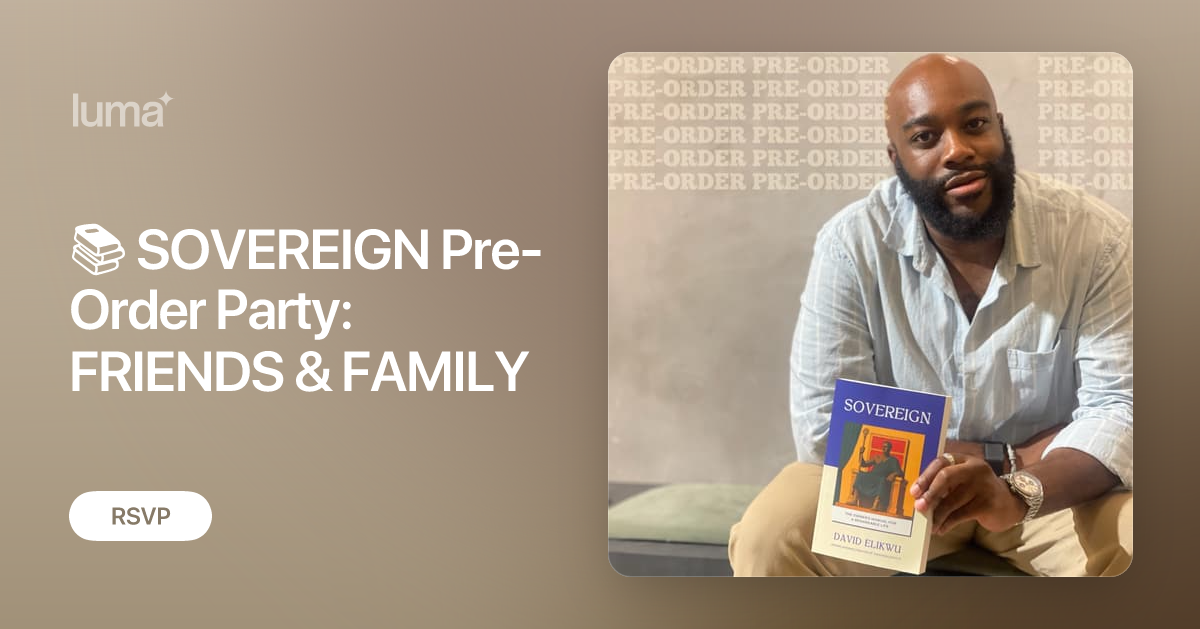
P.S. Tomorrow (Friday 5th Sep) we're having our first little get-together in person! It's a small pre-order party at a bookshop in London. Come say hello, and pick up an early copy of Sovereign!
Listen to your favourite podcast player:


🎧 Listen on Spotify:
📄 Show notes:
- [0:00] Introduction: The Complexity of Modern Life
- Why life feels more complicated than ever, and how simple acts become complex puzzles.
- [1:30] The Running Metaphor
- How tracking and optimising a simple run can lead to frustration and dissatisfaction.
- [2:40] The Age of Hyper-Optimisation
- From fitness trackers to gene-editing startups—how technology fuels our obsession with control.
- [4:00] The Challenger Disaster & Normal Accident Theory
- The story of the 1986 Challenger explosion as a lesson in how complexity creates fragility.
- [6:50] Why We Choose Complexity
- The illusion of control and the quest for a sophisticated identity.
- [8:10] Gnosticism, Biohacking, and Status
- How secret knowledge and complex routines become modern status symbols.
- [10:00] Losing Sight of the Telos
- When metrics and routines overshadow our true goals and desires.
- [12:00] The Art of Effortless Mastery (Spezzatura)
- Lessons from the Renaissance and modern culture’s obsession with visible effort.
- [14:00] Escaping the Trap: Practical Wisdom & Heuristics
- The OODA loop, the limits of data, and why simple rules often outperform complex systems.
- [19:00] Final Thoughts & Call to Action
- Reconnecting with your ultimate aims, favouring heuristics over algorithms, and living with practical wisdom.
The Trap of Complexity: Why Simplicity is the Ultimate Sophistication
Modern life feels more complicated than ever. We juggle endless routines, track every metric, and optimise every aspect of our existence—yet many of us feel more frustrated, anxious, and unsatisfied. Why do we keep falling into the trap of complexity, and how can we escape it?
The Running Metaphor: When Simple Becomes Complex
Take running, for example. At its core, it’s simple: open the door, run, come back. But soon, we start timing our runs, tracking pace, heart rate, stride length, and VO2 max. Each new metric adds another way to “fail”, another reason to feel unsatisfied. This isn’t just about running—it’s a pattern that seeps into every area of our lives.
The Age of Hyper-Optimization
We live in an era of hyper-optimisation. Technology gives us the tools to track everything—our sleep, our diets, and our productivity. But as we break life into a thousand data points, we lose sight of the bigger picture. Complexity, as history shows, creates fragility. The Challenger disaster in 1986 is a stark reminder: a multi-billion dollar space shuttle was brought down by a simple rubber O-ring. In complex systems, small failures can have catastrophic consequences.
Why We Choose Complexity
So why do we keep choosing complexity? First, it gives us an illusion of control. We can’t guarantee perfect health or happiness, but we can control our inputs—our routines, our data, our protocols. Second, complexity becomes a status symbol. In a world obsessed with optimisation, having access to “secret knowledge” or sophisticated routines signals identity and belonging.
Losing Sight of the Telos
The Greeks had a word for ultimate purpose: telos. When we focus on metrics and routines, we risk forgetting our telos—the joy, freedom, or wellbeing that motivated us in the first place. The map becomes more important than the destination. Instead of effortless mastery (what the Renaissance called spezzatura), we perform our effort for the world to see, sharing our routines and achievements on social media.
Escaping the Trap: Practical Wisdom
How do we break free? Not by rejecting data entirely, but by using it wisely. The OODA loop—Observe, Orient, Decide, Act—reminds us that observation is only the first step. Many of us get stuck collecting data, mistaking it for progress, and end up anxious and overwhelmed.
The Greeks distinguished between three kinds of knowledge:
- Episteme (scientific fact)
- Techne (technical skill)
- Phronesis (practical wisdom)
It’s practical wisdom—knowing when and how to apply knowledge—that helps us reconnect with our telos.
Favour Heuristics Over Algorithms
Favour simple heuristics over complex algorithms. Research shows that simple rules of thumb often outperform complicated systems. For example, instead of obsessing over diet protocols, follow Michael Pollan’s advice: “Eat food, not too much, mostly plants.” Build your life around strong, simple heuristics: walk every day, eat real food, go to bed when you’re tired.
Final Thoughts
We are drowning in data and routines, but starving for practical wisdom. The goal isn’t to make life the most intricate puzzle, but to see the picture clearly. Reconnect with your telos, use complexity as a tool—not a trap—and remember: simplicity is the ultimate sophistication.
If you enjoyed this reflection, subscribe to my newsletter at theknowledge.io or check out my book, Sovereign, at becomesovereign.com.
Have a great week!
👨🏾💻 About David Elikwu:
David Elikwu FRSA is a serial entrepreneur, strategist, and writer. David is the founder of The Knowledge, a platform helping people think deeper and work smarter.
📖 My Book: Sovereign by David Elikwu https://becomesovereign.com
🐣 Twitter: @Delikwu / @itstheknowledge
🌐 Website: https://www.davidelikwu.com
📽️ Youtube: https://www.youtube.com/davidelikwu
📸 Instagram: https://www.instagram.com/delikwu/
🕺 TikTok: https://www.tiktok.com/@delikwu
🎙️ Podcast: http://plnk.to/theknowledge
My Online Course
🖥️ Decision Hacker: http://www.decisionhacker.io/
Decision Hacker will help you hack your default patterns and become an intentional architect of your life. You’ll learn everything you need to transform your decisions, your habits, and your outcomes.
The Knowledge
📩 Newsletter: https://theknowledge.io
The Knowledge is a weekly newsletter for people who want to get more out of life. It's full of insights from psychology, philosophy, productivity, and business, all designed to make you more productive, creative, and decisive.
My Favourite Tools
🎞️ Descript: https://bit.ly/descript-de
📨 Convertkit: https://bit.ly/convertkit-de
🔰 NordVPN: https://bit.ly/nordvpn-de
💹 Nutmeg: http://bit.ly/nutmegde
🎧 Audible: https://bit.ly/audiblede
📜 Full transcript:
[00:00:00]
Introduction: The Complexity of Modern Life
David Elikwu: It's all quite complicated, isn't it? This life we're living now. I think more and more many people are finding themselves frustrated with just how complicated life seems to be. They're trying to juggle all these things. They're trying to make life work, make things happen, but it just seems, ah, just complex.
And I think there's a really simple problem at the core of it, and we're gonna explore that today. So you think of something simple, right? You go for a run, you open the door, you run, you come back. The act is simple. The goal is clear. But that's just the theory. The practice actually becomes quite different because once you run then you decide, okay, maybe I'll add another data point.
The Running Metaphor
David Elikwu: Now you are gonna time your run and suddenly you have a bit of a puzzle. You have a number that you're trying to optimize for. You have a, a goal that you're trying to pursue. And soon, not only are you timing. Entire run, you're tracking your pace per mile, and then it's your heart rate zones and it's your stride length, and it's your ve O2 max.
And I'm not just [00:01:00] describing you, I'm describing myself. I am wearing a garin on one arm and a whoop strap on the other. I'm certainly the very person, the hyper optimizer that I'm describing, and. I noticed for myself how easy it can be to turn a simple act of running into something incredibly complicated, and that with every new metric that you add, you find another way to fail, another new reason to be unsatisfied.
And this problem isn't unique to running. We find it in. Pretty much every area of our lives, particularly as we enter this age of hyperop optimization, because we have the materials, we have the data, we have the science, we have the technology to track things, to, know more and more about how we live our lives and.
How to organize the life that we have. Even recently I saw a startup that was advertising, Hey, we can track your genes, your DNA. Why don't you know the exact genes that your [00:02:00] child is going to have so that you can tweak them, so you can organize them? Why would you want your child to grow up?
With this particular disease or with this particular, I dunno, something weird, something you don't like, something that might be difficult or inconvenient for you to have to live with and manage as the parent. And so you should design your child the precise way that you want. But I think this, and I wrote about this a few years ago.
The Age of Hyper-Optimization
David Elikwu: This is the trap of a good puzzle. You start with a simple, clear picture about. How life should be about how you should live, and then in your quest to improve it, to improve the quality, the efficiency, et cetera, you break this clear picture into a thousand tiny pieces. Each new piece of data, and then you get lost trying to put it all back together.
And the core problem here is that complexity creates fragility. The very best example I can give you of this comes from a freezing cold January morning in 1986. This is the era of this space shuttle, which was America's answer to the question of what comes [00:03:00] next after the moon landings and you know, this is the midst of the Cold War period America is racing with Russia to space and beyond.
The shuttle was this symbol of technological prowess. It was the reusable space plane that was meant to make space travel routine. And it's funny that we got away from that mission for a number of decades up until very recently in the last decade or two, and Elon Musk picked up that baton with SpaceX.
But that is an aside. So on this morning of January, 1986. The space shuttle. Challenger stands on the launchpad. It's televised. This is a marvel of precision. This is one of the most complex machines ever built, and the entire nation, the entire world rather, is watching this thing take off and the launch goes up and it is tremendous majestic, uh, but the launch only lasts 73 seconds until it spectacularly explodes. [00:04:00] It's a national tragedy that unfolds live on television and. This obviously begets the question. You know, so much money and time and resources and national pride went into this thing.
The Challenger Disaster & Normal Accident Theory
David Elikwu: How could it end in such a tragedy? So there's an official investigation, there's a, committee hearings and proceedings. People couldn't really get to the bottom of why this happened, why this complicated machine failed until a guy who happened to be on the committee pops up, called Richard Feinman.
Who you may have heard of before Feinman was a Nobel Prize winning physicist, and he was a brilliant thinker, famously, quite irreverent, and he hated bureaucracy. And he suspected that the cause of the Challenger's failure was actually quite simple. And so in the machinery of the space shuttle is something called an O-ring.
A very simple piece, easily overlooked. It's essentially a giant rubber gasket, a ring that's designed to seal the joints in the solid rocket boosters and prevent the super hot gas from escaping. So [00:05:00] it's crucial. It's simple. And so during this televised hearing, Feynman takes a small piece of this O-ring material and he clamps it in a c clamp and dunks it into a glasss of ice water, his glass right there at the witness table.
and after a moment, he pulls it out and the rubber now chilled, has lost its resilience. It doesn't spring back. And so there in front of everyone, he demonstrates this fatal flaw. And so that's exactly what had happened.
This multi-billion dollar system of immense complexity had a catastrophic point of failure, which is this. Tiny, just a simple piece of rubber that couldn't handle the cold. This big system didn't have tolerance for error. It was fatally fragile.
And so there's a sociologist called Charles Perrow who gave this phenomenon a name. He calls it Normal Accident Theory. Which essentially is this idea that in complex systems that are tightly coupled, as he says,
major failures are actually [00:06:00] inevitable, right? It's this idea that the more complex you make a thing. The more inevitable a failure becomes. And the problem is that we are turning our lives into these systems. We track
our diets, our sleep, our work. We create these intricate, fragile routines. And then we wonder why they keep. Breaking. Why do you find it so hard to maintain this morning routine, this evening routine, this workout routine, this pre-workout routine, all these different things that we systemize and organize around, these things just permeate every area of our lives. So why do we keep choosing this complexity? I think the first reason is a deep human need. For an illusion of control. There was historic philosopher Epictetus, who you'll hear me reference a lot over the course of my newsletter and, and this podcast and Epictetus spent his early life in Rome as a slave.
Why We Choose Complexity
David Elikwu: But he taught that peace comes from knowing what you can control, which are your own thoughts and actions, [00:07:00] and the things that you cannot, which is everything else. But I think we have taken this piece of wisdom and kind of perverted it. Because we know that we can't control the ultimate outcome like having perfect health.
So instead we create a universe of inputs that we can control. It's all the numbers I've tracked my sleep for years and years. I can go, I can see the data. I've got my whoop, I've got my Garmin watch, so even though you can't guarantee a perfect night's sleep, you can however follow this.
17 step sleep hygiene protocol, which gives you this feeling of control. There's a reason people like Andrew Huberman, who I do love and I follow his podcast, but there's a reason people like that are so popular. They give us this idea, this sensation, that we can have control.
We can look at our relationships, we can look at our health, we can look at our sleeping and waking, and we can optimize all of these things. And so we turned the puzzle of these [00:08:00] things into a comfort blanket against the chaos of reality. So that's the first reason. I think the second reason is a quest for a sophisticated identity.
Gnosticism, Biohacking, and Status
David Elikwu: There was this, ancient set of beliefs called gnosticism, which was a major rival to very. Early Christianity and Gnostics believed that their salvation came through gnosis, which is secret, esoteric knowledge. This idea that simple truths were for the masses, the basic people, the simpletons, and actually the enlightened people had this access to higher, more complex wisdom.
And that is the way in which you are saved. And so this. Lineage lives on in the impulse of the modern biohacker, the life optimizer. This idea that, simple advice like, yeah. Eat real food. This idea that, simple advice like eat real food, feels insufficient. The identity of the biohacker is built on having access to the notices of blood tests and complex protocols.
[00:09:00] This is your Bryan Johnson, Bryan with a y, think it is. And if you see this guy, he tracks the tensile strength of his penile erections through the night. All these things, you know, he's tracking absolutely everything about his blood, his skin. He was taking blood from his son, trying to doing all kinds of incredible things.
And again, this is not to cost more judgment on anyone. I have nothing to say about, Brian Johnson himself. But it is to say that in this world, complexity itself becomes the status symbol. This idea that he exercises so much control over his life, over his bodily functions, over his aging. This is the sovereignty.
So this seduction of complexity, this seduction of nosis has a cost because when you formalize a goal. You obscure the original desire and, and the Greeks, the ancient Greeks had a word for this, which was telos, which is the [00:10:00] ultimate purpose, the ultimate aim.
Losing Sight of the Telos
David Elikwu: So the telos of running might be joy, it might be freedom. But when the goal, instead of that ultimate telos becomes a set of metrics on a watch, the telos gets forgotten, and then we begin to serve the data and not our own wellbeing. We are chasing the metrics, the scores, the Strava updates instead of the sensation, the embodiment of the feeling.
The map becomes more important than the destination.
This obsession that we have with visible effort is actually quite a modern thing. If you go back to the Italian Renaissance, the ideal was this concept of spezzatura. This word popularized by Boulderer Castiglioni, who was a diplomat, and he wrote this famous guide, the Book of the Courtier. And uh, so in, in the Renaissance court, it was this place of intense social competition.
I was just talking to my partner the other day about the, the politics of beauty, et cetera. And I was [00:11:00] just recalling that actually modern fashion in the way that we consider it was invented pretty much by
Mary Antoinette. Mary Antoinette was one of the first people to start deciding to wear different clothes every day. That was new. That was groundbreaking because before then, people just wore uniforms. Life was quite simple. You knew what you were going to wear every day. Either you were dressed by someone seasonally or you had clothes of your caste.
And so she invents this idea of modern fashion. She changed her clothes every day and people were like, oh, this is a bit, it's a bit lewd. It's a bit ludicrous.
And so returning to Mr. Castiglioni, in the Renaissance period, the court was this place of intense social competition. The consummate courtier had to be the warrior and a poet, and a scholar, and an athlete. Having those skills wasn't enough. There was this concept of spezzatura, which is the art of making all of that look easy.
The Art of Effortless Mastery (Spezzatura)
David Elikwu: So you have the competence, you have the skill, you have the knowledge, but there's also this. Studied [00:12:00] nonchalance, the grace that makes it feel effortless. It conceals the immense effort that goes into the skill, and this became valued so highly because it signaled true mastery.
This the idea that you know all the basics well. You know your manners, you know everything that you ought to be doing and actually, ha, it's quite effortless. And the modern version of this is perhaps, you know, you wear your suit with a tight askew and perhaps your, your, your shirt collar is a bit ruffled.
And, you know, you probably see this with someone like Boris Johnson quite clearly actually. Who has this persona of the blustering buffoon? Well, I probably added the buffoon, but he, he might accept the blustering. And the idea is. Okay, he's Boris Johnson, but he went to Eton. He knows the rules, he knows exactly how things are supposed to be done, but when you know the rules so well, and when you know how you're supposed to carry yourself, when you know how to speak, you can dispense with some of them.
You can mask some of them in in your own air of sophistication, as it were, in your own air of [00:13:00] being. And so spezzatura is the idea that the skill is part of you, and it's so deeply analyzed that. You don't need to hyper focus on it. You don't need to be looking prim and proper and making visible efforts. It actually fades into the background.
But modern culture is quite the opposite. We don't hide the effort, we perform it, we post our workout logs. I, I upload, I take pictures of my watch face. When I finish a run. Sometimes you post it, they automatically actually upload to Strava so people can see that I've been running so people can see the, the exertion of effort and you know, we track our.
Sleep scores, the complex routines. We share things on Instagram. People need to see that we went on holiday. It's not enough just to know that we had this great experience, the world must do, and so we replaced the telos of Effortless mastery with the performance of the puzzle itself. So. We know we're in this trap.
Escaping the Trap: Practical Wisdom & Heuristics
David Elikwu: How do we get out? And I think it's not necessarily to [00:14:00] reject the data entirely, but more so to be wiser in how we use it. There was this concept called the OODA loop, which was developed by a Maverick fighter pilot called John Boyd, who actually I think is referenced in one of Ryan holiday's books. I don't think I have it by my side here.
It's probably somewhere else, but the OODA loop, you know, he comes up with it for life and death, dog fights, right? And OODA is spelled with two o's. So it's observe, orient, decide, act. The point is that in a hyper-stress situation, you can go through this checklist quickly and it gives you a framework to be able to figure out what you're supposed to be doing.
But I think actually in modern life, how we. Proceed with this is that we're actually stuck at the very first stage, the observe step, and when we get stuck in this endless loop of simply observing, we keep gathering data, we keep creating more puzzle pieces, and we mistake the act of observation for progress itself.
We're not actually getting to [00:15:00] the action. What do you do with this data? I have been collecting sleep data and sleep analytics for probably four or five years. What do you do with it? I think. What a lot of people do in practice is actually just become quite anxious. People collect this data.
People know what they're supposed to be doing, and it creates this sense of anxiety because you have this puzzle piece, you have this routine, you have this schedule. You know what you're supposed to be doing. I'm supposed to be going to the gym x number of times per week, and I was supposed to be doing this, and I was supposed to be doing that.
And, and you get flustered and you get anxious and you start building this self-loathing within yourself. This idea that I was supposed to be doing this and I'm not, and it hurts and it's painful and now I'm sad, but I think that sensation only exists because of the complication.
And I think the secret to breaking out of that loop and rediscovering the telos behind every routine, behind everything that you're chasing, thing you're trying to do is some kind of telos. Why do you have a morning routine? There are ultimate aims. Perhaps [00:16:00] it is. You want to feel better, you want to feel more.
In control of the flow of the day. You want to maintain a higher level of energy, right? The energy is probably one of those higher goals. You want to maintain your energy and be able to distribute it throughout the day. You want to be able to have your friends and family feel loved because you communicate in a timely way.
You are able to respond to them, you're able to do the things you need to do. You are able to feel productive in your job because you're able to get things done, et cetera. So there are these ultimate aims. And then you get wrapped in the routine. They get wrapped in the calendar and the schedule and the,
sophistication of the machinery that we create around the things. But the Greeks, they had another concept called essis, which is practical wisdom. They actually had three main words for knowledge. The first EPIs me from which we get epistemology, but EPIs me is scientific fact. This is raw data, which is.
Largely what we're talking about now. The second is Techne, which is technical skill, and this is the [00:17:00] complex routine. But the third part of knowledge is esis. This is the master virtue, and this is practical wisdom. This is knowing when and how to apply your knowledge in a specific situation in order to serve your telos.
So these things are distinct in some way, but they also interact with each other. And the problem is not getting too obsessed with the first or the second, but actually translating them into the third, this practical knowledge. It's about what you do and how you use the data, how you use the schedule, using them in a way that aids your ultimate goals and not becoming obsessed with the thing itself.
Life is not about the schedule. It's not about the morning routine. It's not about. The thing that you're currently focusing on, it's remembering to reconnect ourselves to the ultimate aim. And actually you can take whatever route is necessary to get to the ultimate aim. You can dispense with the route entirely.
You know when you are going for a run. Strava has been trying to get me to pay for a very long time. I don't [00:18:00] pay because according to Strava, they say, oh, you need the routes. That's what you're paying for. That's part of it, you know, among many other things. But the routes, this will tell you where to run and how to run.
I don't want that actually. I use Strava, but I use it for free. I just run, I just run around my neighborhood. I take random routes when I walk. I don't always have a plan for how I'm going to walk. I get to a certain point and I decide, ah, how much longer do I want to walk? And I change my roots and I keep going.
And I think reconnecting to the telos instead of to the
techne, just being obsessed with, you know, the skills and the things themselves. This allows you to feel more alive in the things that you do.
Final Thoughts & Call to Action
David Elikwu: And I think on a societal level, we are drowning in data and routines and we are starving for resis. But how do you cultivate that? I think what it comes down to is favoring heuristics over algorithms. A heuristic is a rule of thumb. There's a German psychologist, Gerd Gigerenzer, and he had a team at the Max Plank [00:19:00] Institute that shows that
simple heuristics often outperform complex algorithms. These are many, many words, but the point being that simple rules of thumb, I forget which book it's from, but, uh, it's a, it's a book on food. I'll find it for you. Maybe I'll put it in the description, but there's a simple rule of thumb for eating. Well, you could go through these complex protocols and follow complex diet, but actually the symbol way of phrasing all of this is, eat food, not too much. Lots of plants, very simple. Three clauses in a sentence, and that's it. You don't need to worry about, oh, can I, can I eat eggs if I follow this routine? You have people doing, oh, it's the, the raw diet. It's the natural diet, it's this, it's that. And then you have to go on a blog and you have to go on Reddit and, and try and figure out which things you're allowed to eat.
How can I make this work so it's consistent with this routine, dispense with all of that. It's my claim, my call to you.
And so Gigerenzer uses, an analogy that I think works really well here. He [00:20:00] uses baseball as an example. He says the outfielder catching a ball is not in his head. Solving some complex parabolic equation where he's seeing the arc of the ball and deciding exactly where to position himself Really. In real life, he's using a simple heuristic.
He runs, he keeps the angle of his gaze on the ball quite constant and runs to where he thinks the ball will be. But he does it in a very natural way, not in a predictable way, not in a routine way. He does it naturally, and so I think this is the. You build your life around these strong, simple heuristics, right?
Eat food that doesn't have a very long ingredient list. Walk every day if you can go to bed when you are tired. One thing I struggle to do, but use the complicated watch when you have a specific time bound mission, but for the rest of life, learn to tell the time from the sun because you're not trying to have your life become the most intricate puzzle.
You're just trying to see that picture [00:21:00] most clearly. So. Hopefully this was useful. I'm David Elikwu. This is the Knowledge. If you would like more things like this, please do subscribe or whatever the calls to action are, or come to https://theknowledge.io, where you'll find my weekly writing, my newsletter, which is now followed by over 40,000 people, which is incredible.
Thank you so much for joining me on that journey, and get my book Sovereign at becomesovereign.com. It is excellent if I do say so myself, but actually there are some very good endorsements on the back. If you go to the website, you'll see a bunch of quotes,
So have a great week.