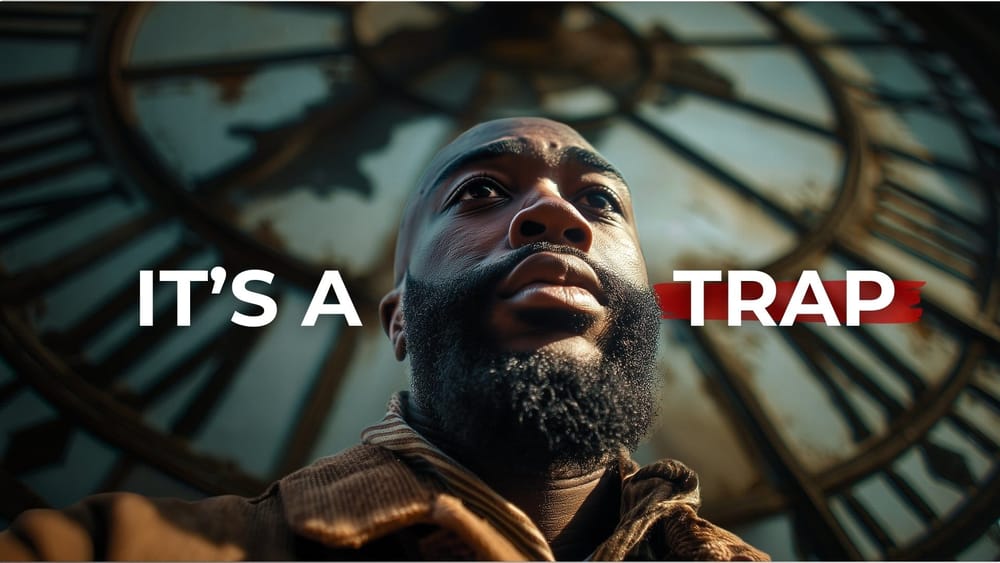


In this episode of 'The Knowledge,' host David Elikwu dives into the dichotomy between horizontal and vertical models of engaging with the world. Using Donald Knuth's drastic life decision to quit email in 1990 as a starting point, David explores the philosophical implications of being either on top of things or at the bottom. The episode draws on historical and contemporary examples, from ancient philosophies to modern neuroscience, and includes insights from notable figures like Isaac Newton and Leonardo da Vinci. David emphasises the value of deep, focused work versus the appeal of staying broadly informed and connected, ultimately challenging listeners to identify the one thing so compelling to them that it is worth digging deep for.
He discussed:
🔍 The trap of being on top of things
📲 How attention gets stolen
📖 Seneca's philosophy of distraction
🌌 Plato's Allegory of the Cave in your work
🔬 Neuroscience and focus.
🎨 Contrasting Isaac Newton and Robert Hooke
🖌 The approach of Vincent van Gogh vs Leonardo da Vinci
Listen to your favourite podcast player:


🎧 Listen on Spotify:
📄 Show notes:
00:00 Introduction and Overview
00:19 Donald Knuth's Decision to Quit Email
01:53 Horizontal vs. Vertical Thinking
02:17 The Horizontal Model: Staying on Top of Things
04:07 The Vertical Model: Going Deep
05:49 Historical Perspectives on Depth vs. Breadth
20:21 The Balance Between Horizontal and Vertical
24:10 Conclusion: Finding Your Focus
The Horizontal vs. Vertical Dilemma: Navigating Depth in a Surface-Level World
In our fast-paced modern world, the struggle to balance productivity with depth is becoming increasingly relevant. This dilemma is encapsulated in the story of celebrated computer scientist Donald Knuth, who chose to quit email permanently on January 1st, 1990. Viewed by many as a radical productivity hack, Knuth’s decision is far more than a life hack; it's a philosophical statement. It's a stance against the societal push towards constant connectivity and superficial engagement—a message that beckons us to consider if our lives are being led on the surface or in-depth.
On Top Versus On Bottom
Knuth’s inspiration stems from his reflection that while email is effective for those who wish to stay on top of things, his pursuit was being on the bottom of things. This dichotomy—horizontal versus vertical thinking—lies at the heart of modern productivity debates. Society often promotes the horizontal, the state of being on top of things, manifested in endless notifications, multiple social media platforms, and a constant barrage of information. Its utility is undeniable, allowing people to stay connected and informed across a varied plane of ideas and news. In my past as a corporate lawyer, I can attest firsthand to the utility of staying abreast of emerging information, helping steer conversations and decisions.
However, we mustn't ignore the vertical. Vertical thinking involves diving deep into a single topic or craft, seeking to understand its principles from the ground up. This isn’t merely reserved for academics or scientists; it's a pursuit that anyone can—and should—embrace.
The Cost of Staying Surface-Level
Historically, this tension isn't new. Even Seneca lamented the "busy idleness" he observed in ancient Rome. His assertion, "it is not that we have a short time to live, but that we waste a great deal of it," remains a profound criticism of how surface-level engagement can lead to a wasted life. Over two millennia later, these ideas are echoed in Plato’s allegory of the cave, where prisoners mistook shadows for reality. This allegory highlights a world filled with superficial imitations that many inadvertently accept as the truth.
In this vein, Nassim Taleb's reflections on the prominence of commentators, as opposed to active contributors, ties back to the absence of skin in the game. Merely skimming the surface by observing reflections and opinions can replace the actual engagement with real work.
The Depth We Seek
History provides examples of individuals who ventured into profound depths resulting in significant contributions. Isaac Newton, during Cambridge's closures in the 1660s, did groundbreaking work in seclusion, unearthing universal gravitation and developing calculus. Contrary to the expansive but occasionally scattergun approach of contemporaries like Robert Hooke, Newton’s disciplined focus underscores the potency of vertical engagement.
Conversely, figures such as Leonardo Da Vinci demonstrate the complications of an unbalanced approach. His life exemplifies both impressive focuses, as seen in the Mona Lisa, and the chronic non-fulfilment of potential projects.
Striking the Balance
The balance between horizontal flexibility and vertical depth appears vital. As an author, this philosophy played a crucial role in the development of my upcoming book "Sovereign." Initial ideas stemmed from broad-ranging dialogues and inspirations, demonstrating the indisputable creative spark inherent in horizontal exploration. However, true deep work required deliberate focus, pulling these fragments into a cohesive volume.
Steven Johnson’s concept of the "adjacent possible" reveals that innovation arises from new connections between existing ideas—a process fostered by horizontal exploration. Yet, genuine productivity and meaningful creative output inevitably call for dedicated, vertical engagement.
Conclusion: Choosing Your Depth
In a world nudging us to forever skim surfaces, striving for depth is a conscious choice. The value of our contributions—and potentially our lives—relies not on myriad surface levels we navigate, but rather on those rare depths we choose to pursue. As you navigate modern life's relentless tide of information, consider: what is so vital, so compelling within you that it's worth the dive?
👨🏾💻 About David Elikwu:
David Elikwu FRSA is a serial entrepreneur, strategist, and writer. David is the founder of The Knowledge, a platform helping people think deeper and work smarter.
🐣 Twitter: @Delikwu / @itstheknowledge
🌐 Website: https://www.davidelikwu.com
📽️ Youtube: https://www.youtube.com/davidelikwu
📸 Instagram: https://www.instagram.com/delikwu/
🕺 TikTok: https://www.tiktok.com/@delikwu
🎙️ Podcast: http://plnk.to/theknowledge
📖 My Book: https://becomesovereign.com
My Online Course
🖥️ Decision Hacker: http://www.decisionhacker.io/
Decision Hacker will help you hack your default patterns and become an intentional architect of your life. You’ll learn everything you need to transform your decisions, your habits, and your outcomes.
The Knowledge
📩 Newsletter: https://theknowledge.io
The Knowledge is a weekly newsletter for people who want to get more out of life. It's full of insights from psychology, philosophy, productivity, and business, all designed to make you more productive, creative, and decisive.
My Favourite Tools
🎞️ Descript: https://bit.ly/descript-de
📨 Convertkit: https://bit.ly/convertkit-de
🔰 NordVPN: https://bit.ly/nordvpn-de
💹 Nutmeg: http://bit.ly/nutmegde
🎧 Audible: https://bit.ly/audiblede
📜 Full transcript:
David Elikwu: [00:00:00] Hello. Hello. So, as promised, we're gonna have some more, one-to-one times more room to explore ideas and thoughts, some of which might come from the newsletter, some of which might come out of the void, out of my notebook, uh, here, which you might see if you're watching this on YouTube, places where I dig into things and dig into thoughts and ideas.
And today I wanna
tell you about a decision that was made on January 1st, 1990. And the man who made this decision is a computer scientist named Donald Knuth.
And on that day, he quit email. Forever. And in retrospect, he says since that day, he's been a happy man ever since. And normally when people hear this story, their focus is drawn to the aspect which resembles productivity, right? It's this life hack, this idea that, oh, you could just remove yourself from email and suddenly have a lot more free time. Suddenly your life is somehow different. But I think part of this misses the point entirely because to me, [00:01:00] Knuth's decision isn't just about efficiency.
It's. More of a philosophical statement because he said in his writing, email is a wonderful thing for people whose role is to be on top of things.
But he added my role is to be on the bottom of things. And in doing so, he presents this dichotomy this potential gap between two different ways of thinking, two ways of navigating the world, being on top of things and being on the bottom of things. And. This distinction got under my skin because I think it's perhaps one of the most important unspoken tensions of modern life, uh, in as much as we already spend loads of time talking about productivity, how to get the most out of your time, et cetera.
But this gets to the heart in my mind, of this battle for the very architecture of our attention. I want to explore that battle and we are going to go from ancient Rome to modern neuroscience to understand [00:02:00] this schism between what I'll call the horizontal and the vertical models of engaging with the world.
So today we're trying to answer the question In a world that pulls us sideways, what does it take to go deep? So first we will define our terms.
So the horizontal is idea of being on top of things. This is the endless scroll. It's the inbox, the group chat, the Brets, all your multiple inboxes. I am continually frustrated by how many messages I get. How many slack pings, bing bon bang.
Notifications out the wazoo. All these things trying to grab your attention. You're trying to stay on top of things. There's news, there's Twitter, there are Instagram pages that will promise to tell you, you know, the latest goings on. There are YouTube channels that will tell you the latest football news they will react to.
Uh, you know, uh, the latest AI releases all of these things. There is this constant push towards breadth. You are connecting dots [00:03:00] across a wide flat plane of information. And this is not necessarily inherently negative. This is just one model of being on top of things. Right. when I used to work in corporate law, This was very valuable in a sense. Every morning on my commute, I had a very long commute 'cause I lived quite far out. I would read, I had all of my RSS feeds coming into one app, and I would read the ft. The economists, every newspaper, every blog. Both on my way to work and on my way from work. It's about an hour or so each way.
So each day at a minimum, I'm spending a minimum of two hours staying on top of things, staying abreast. What that means is that someone can mention something and I actually know the. You know, some of the latest thoughts from Bloomberg, from the Economist, from, from many of these places. I know what people have just written.
I know what's just happened, and I can have some interesting things to say. I can be responsive, I can, uh, help guide conversations. I know what the zeitgeist is, and so there's this sense in which the horizontal can [00:04:00] feel good. It feels productive. There's this buzz of being informed, connected, responsive, but there's another model.
Which is the vertical, and this is something else entirely. It's not about breadth, but it's about depth. It's a slow, frustrating work of digging down into a single topic, a single question, a single craft, until you understand it from its first principles.
now probably the easiest analog of this you might be familiar with. could be many of the essays you were assigned at school, which you probably hated. many of you. Me, also to some extent. Where you are given a topic, okay, go away, write 4,000 words on this or write however much.
it can be dull, it can be frustrating. And I think there's a sense in which, because of the way that we're prepared to do these things at school, it kind of puts people off wanting to dig deep on topics, wanting to understand things thoroughly. And actually what we prefer are cribs. Cliff notes. We prefer summaries.
We prefer journals. We prefer the blog that describes the book. We prefer the [00:05:00] podcast that describes the blog that describes the book. We prefer higher levels of abstraction where we don't have to read Anna Karemina and get into the weeds of all these things. Someone should just explain it to us.
I don't need to understand physics. Let me listen to Neil deGrasse Tyson. I am one of these people I listen to Neil deGrasse Tyson and Brian Keating and, and numerous people to better understand certain things because I might not always have the time or the energy to get deep into the weeds and understand an idea.
And so many of us, and me to an extent live for most of our lives now as adults on the horizontal plane. This becomes our default setting, right? There was a time that we went deep. We don't do that anymore.
The broad, the broad plane, the horizontal plane Becomes the path of least resistance, And it's the vertical dive that takes the conscious, deliberate, and often difficult choice.
but this isn't necessarily a new problem. This isn't about your iPhone. This isn't about your iPad. People talk about iPad babies. This is. A battle that's [00:06:00] been going on far longer than whatever the latest fad is. Almost every decade there is some moral panic about, oh my gosh, everyone's gonna be using AI before that.
Oh my gosh, everyone's playing on their phones before that. Everyone's playing on their computers before that. Everyone's watching tv before that.
Everyone's reading the newspaper. Oh my goodness. Uh, before that everyone's reading books actually, that, that used to be the problem, right? Everyone's too busy reading books. No one's actually out there in the world doing things or memorising great treatsies and, and these kind of things.
and so the more ancient battle isn't really about the technology that we use or the mode by which we interact with ideas. It's really. This battle between the surface and the depths.
if you go back 2000 years ago, the Roman stoic philosopher Sene
ca, was already. Wrestling with this. And he looked around at the frantic busyness of Rome and he coined a term for it.
He says, busy idleness. This idea that people were constantly occupied, rushing [00:07:00] from one social engagement to another, consumed by trivial matters, but in his words, they weren't truly living, they weren't really alive. They had this busy idleness, busy doing nothing. And this is 2000 years ago, and people still have the same conversation today and, and. Seneca w rote something that could have been written this morning, which is, "it is not that we have a short time to live, but that we waste a great deal of it". Right? Doesn't that not describe every newspaper headline you read today that laments, TikTok, laments Instagram, laments social media, and whatever.
So Seneca saw his peers squandering what he saw as their most precious resource in a flurry of what we are calling horizontal activity. They're never pausing to go deep on the questions that mattered. They are consumed with busy idleness. And if you go beyond that time,
the ancient Greeks later took this further. You have Plato's famous allegory of the cave, perhaps the most famous metaphor in all of Western philosophy and. [00:08:00] Perhaps the ultimate story of this paradox between the horizontal and the vertical.
So Plato's allegory, as you know or may not know, features prisoners chained in a cave who can only see the flickering shadows on the wall. And to them, the shadows are real. They become real because they can't see behind them.
the shadows are being cast by real objects in the world outside and. You could also be looking outside, but instead, if you are chained facing the wall, then the shadows, the reflections on the wall become real to you. And so in this model, you could perhaps say that the shadows on the wall are the horizontal mode, the shadows on the wall are the way of looking at the world, which is.
An endless feed of secondhand information. Its opinions. It's the illusions that we mistake for reality, right? It's conjecture, it is. You know, Nassim Taleb, I have one of his books here. Uh, The Bed of Procrustes, but he has a number of great books, but he [00:09:00] often laments this idea of people that don't have skin in the game, which is one of his great books.
Um, and this idea that now more and more the world is full of commentators, not people actually doing the work, but simply commenting on the work and, and. Curating or sharing the work. And while curators do have a very important role to play, the extent to which our lives can be filled and consumed with these secondhand opinions, with conjecture, we can easily mistake that for the real stuff, the actual things that are being made, things being done in the world.
And so for Plato, the philosopher is the one who breaks the chains and undertakes the painful vertical journey up out of the cave and into the sunlight. and so for the first time, the philosopher is not merely seeing the shadows of things is not content with the simulacrum of life, but is, but wants to see things themselves, their true forms. This is the person that is willing to go deep, to really wrestle with ideas and not just the representation of an idea. A [00:10:00] good analog for this is something I mentioned before, right? It's this idea that, okay.
You could read a book, you could read Plato, you could read and, and, sorry, just a caveat, this is not me merely saying, the world would be better if only we read books, and that's the solution to everything. But it is this idea that the deeper philosophy behind this, which is that you could read a book or you could read the summary of the book.
You could be content to get to the bottom of, okay, Can I unravel all the complexity that is presented to me in this format? Or is it merely sufficient to just read the summary and gain the basic gist of things. And actually that's probably enough. I can just read the news.
Instead of seeing what's out in the world, I can just read the blog and the summary, the conjecture, the thoughts, instead of going and taking a look at the things themselves. And so this is the balance. This is plato's allegory, perhaps in a form. And so what Plato draws the line here is between mere opinion [00:11:00] and true knowledge.
One is easy, passive flat. The other is hard won active deep.
And then we move forward in time. Fast forward a couple millennia to the world of science. Now we started with Ancient Rome, then we went to Ancient Greece now still maybe a hundred odd years ago. If you go to, I'm gonna butcher his name here, but Santiago Ramon y Cajal he was perhaps one of the forefathers of modern neuroscience. He was a Spanish scientist, and he won the Nobel Prize for mapping the intricate jungle of the human brain. And he did this for the most part, while working in Spain in relative obscurity, right? Well, with decades of intense singular focus.
And he has this idea about what it took to do this kind of deep vertical work. And he says that the true investigator can't be a passive observer. He must be a hunter. Uh, and of course, you know, as you know, you can take he or she as the case may be, but his words were "the naturalist who is not a [00:12:00] hunter, is a furless cat, a sneak without venom. in a word, a domestic animal".
So what he meant by that is that real discovery requires a kind of predatory focus, a willingness to leave the comfortable domestic world of distraction, and to hunt for the truth in the wild jungles of the unknown, to get to the bottom of things. This is what it takes to do real work. To do good work.
And in my book, sovereign I, uh, use an example by contrasting the careers of Sir Isaac Newton and of Robert Hooke, who many of you may have encountered in high school biology, both contributed tremendously to the world of science as we know in, in various forms. But I did a two part contrast here. Uh, and you can read the book to go into, into more detail.
It's not actually out yet at the time. This video will go out. It is released on September the 24th, 2025 but you can pre-order it@becomesovereign.com. That was a very [00:13:00] unintentional plug, but it is, it's fitting here. But anyway, I drew this contrast between Isaac Newton and Robert Hooke,
in fact, let me read it to you, because I can find this quite quickly here.
And so I'll, I'll partly read, partly paraphrase, but for a time in the late 16 hundreds, Robert Hook was probably the most broadly talented scientist alive. Arguable, but I would make the case. He made notable contributions to physics.
For example, Hooke's Law of elasticity. he made contributions to biology like coining the term cell. In Micrographia 1665, he made contributions to astronomy, like observing Mars, suggesting Planetary gravity and more.
Then after the Great Fire of London in 1666, hook was appointed the surveyor of London. He was the chief assistant to Christopher Wren. He played a key role in the urban replanning and even co-designed the monument to the fire. The essence is he did a lot of stuff right. Robert Hook, very talented, did loads and loads of things, architecture, physics, biology, blah, blah, blah.
But at [00:14:00] the same time. There's another mind who went vertical, incredibly deep in pretty much one domain, right? So at the same time as this, a young Isaac Newton goes into near total isolation during the Cambridge plague closure of 1665 to 1667, and he emerges having quietly rewritten the laws of reality.
So in just a few years. Newton formulated the law of universal gravitation and cracked the physics behind white light. Uh, when he was asked why the planets in his calculations orbited in ellipses rather than in circles, he invented entirely new mathematical tools like differential and integral calculus to find the answer, which allows us to describe planetary motion accurately.
And this is super impressive. And then you realize they did all of this before turning 26. Now you might say, whoa, incredible. But I think to stop there is to miss the point as I point out in the book, because.
As Isaac Newton continued in his life, he made all these tremendous contributions before [00:15:00] turning 26. But later in his life, he grew distracted. He was chasing mysticism. He was chasing alchemy. He then started doing all kinds of things and by the time he died.
Newton had written just as much about alchemy and strange, conspiracy theories about the Bible, as he did, about physics, right? So he did all these contributions to physics, but then he also actually spent half his life chasing all kinds of shadows in the dark.
And so there's this idea that just as much as you can go deep, you can easily get distracted and dragged into something else. And so notwithstanding the case for going vertical might seem pretty clear, right? You had the stoics, you had Plato, you have noble laureates.
They all seem to agree. We have the first half of Isaac Newton's life, but we then see the counterclaim of how it's not always clear cut. There might be this tremendous benefit. Of going deep, going vertical, but you can be led astray. And not just that, but I also actually mentioned this in the book, but I've talked about this in the past, on a podcast I did with Justin Moore, who has a great book.
I was [00:16:00] drawing this distinction between the life of Leonardo Da Vinci and of Vincent Van Gogh. And I was talking about it in a different context, but the part that's relevant here is this idea that. Vincent Van Gogh was not naturally very talented. but he sketched. He sketched, and he sketched. He did loads of drawings.
At first he was not very good. People laughed at him. But in his lifetime he did over 2,100 paintings, probably another, something around 900 sketches. So thousands and thousands of pieces, and he barely made a penny in his lifetime, but. By the end of his lifetime, we can look back at this tremendous body of work and we can say, wow, this guy was talented.
This guy was really good at this thing because he was so prolific. And, and The notable thing about Van Gogh to mention is he was only painting for about 10 years, right? He died very young in his thirties, so he only had a 10 year career as an artist.
Leonardo, on the other hand, had 40 years, and in those 40 years he produced 20 masterworks. Right? So you have Van Gogh over 2000, Leonardo [00:17:00] 20, and so the immediate conclusion you might draw is that. Okay, fine. He only did 20. But then Master Works. You have the Mona Lisa, you have all these incredible arts.
But then you remember that the Mona Lisa wasn't finished. The Mona Lisa wasn't even delivered. and that is a trend you will see throughout the Leonardo's life because the very first thing that he was commissioned to make was never delivered.
The very last thing that he worked on, the Mona Lisa was never delivered. He spent 10 years on that, and even on his deathbed, one of his biographers wrote that he lamented the fact in his words, that he'd failed both God and man By not working at his craft as he should. So even Leonardo, who is the case study for going broad and for going horizontal, for spreading yourself across all these things.
and perhaps, I make the case in the book as well that. Perhaps he would not have been able to produce things at the quality that he did if he did not spread himself across all these domains. If he was not learning from here and from there, and taking all these things with him and turning them into [00:18:00] these pieces that he eventually made.
But even he himself says on his deathbed, I failed. I felt, God, I failed, man. I haven't used my talents well, and it's very interesting, very often when people. Invoke Leonardo. We talk about his drawings, we talk about his sketches. He drew trebuchets. He drew the human body.
He drew all these things. Whoa, all these ideas that he had. And then you remember, this is his notebook. These are his sketches. These are not, they're not things that he has made. The things that he made were great, but he has so many more sketches of things he could have made that he never got around to.
He has so many more ideas, so many more commissions of things that he could have done that he never got around to. Things that he said he was going to do that he never actually did, because even though he had this 40 year career, life is short. Life is long. Life is also short. And, and this ties back to these ideas that we discussed, um, of Seneca, of Plato, this idea that people can be full of busy idleness.
Not to say that Leonardo was ever idle, but he was incredibly busy and yet didn't finish all [00:19:00] the things that he thought he was going to do. And so this is the duality of life. You can have a very prolific life, maybe like Van Gogh, where you get a lot done, but you might not find the fruit during your lifetime because it's only after doing so much trying so much applying himself very narrowly, going vertical on this one thing, trying very hard to do this one thing.
Eventually people can say, wow, he really did it. But then you could also live like Leonardo where. He tries so many things, some of the things he barely tries at all. He just has all these ideas, has all these notes. Some of them he finishes, some of them he doesn't. And then you have this weird duality where we celebrate Leonardo and we say the Mona Lisa is great.
He lamented it on his deathbed and said. I didn't work at this thing as I should. I didn't use my talents. I didn't apply myself properly because it's not done. Leonardo was not happy with the Mona Lisa, it wasn't finished. He worked at it for over 10 years. We put it in the gallery and we say, wow.
Incredible. But he was continually frustrated 'cause he [00:20:00] felt he didn't go deep enough. So there's a balance here.
And you can see in the life of Leonardo, both the vertical and the deep right, he spends 10 years on Mona Lisa and doesn't finish. But despite going deep. Part of the reason he doesn't finish is 'cause he wasn't working for 10 straight years on the Mona Lisa. He was applying himself here and there over the course of 10 years while applying himself to many, many other things.
And so the conclusion that you could draw to go against the case that I've been making for going deep, for going vertical is that the vertical life is the life of a hermit. It's disconnected, it's brittle, and frankly, it misses out on a lot.
And I could just be describing my life because for the last year I've been writing this book. Deactivated my Instagram. I was completely offline in many senses. You know, I might have been, on certain platforms, but I was barely writing and publishing new stuff. I was incredibly just consumed by writing this 300 and something pages just focused on producing this one artifact.
And thank goodness it just took a year, but perhaps there are others and there is [00:21:00] another mode of doing this where I could have taken a horizontal approach. I could have been the grazing mind, and that has its own unique power because in going horizontal, this is how I started this newsletter.
This is how I started my podcast. My podcast is incredibly horizontal. I speak to people from a variety of domains. That's how I have ideas, that's how I have thoughts. So many of the initial chapters of this book came from the fact that I was able to spread myself. I was able to.
Have conversations with people. I have spoken to physicists and scientists and people from so many different domains, and I was able to cobble those things together and rework them in my mind and have new thoughts and have new ideas. and similarly in my writing, I spread myself in the same way.
Um, and, and you could say that the horizontal is where creativity comes from, right? The vertical might be where productivity comes from, but the horizontal is where creativity comes from. And the writer Steven Johnson talks about this idea of the adjacent possible. This idea that great innovations don't just spring from nothing. They happen when someone takes a [00:22:00] preexisting idea from over here and connects it with an idea that's over there, and the collision of these old ideas into something new can only happen if you spent time grazing horizontally. Collecting disparate dots, various ideas from here and there.
And I've talked about this, in the past, my own writing processes. I make notes as I go. I got incredibly frustrated trying to create new works from scratch where I just sit down one day and I just write and I spend three hours and a piece emerges and I post it. And I used to do that.
It worked for many weeks, but I've been writing this. For five years now, and eventually you get a point where you can't just sit down and write something from scratch, brand new. the only way it was possible is actually I decided I was not going to finish anything. maybe I take some notes from Leonardo here.
Where I decided I'm not gonna finish anything. I will start lots of things and build up lots of little snowballs, but I'll keep track of all of them. And as I continue going out in the world, as I continue encountering new ideas, I'll find things that could further some of these things that I've done before.
[00:23:00] Um, and. Slowly over time, some of these different ideas will aggregate. And then when I come every week and I sit down and I say, okay, I need to publish something. I can go back and look and I've got a bank of various ideas and then I can take one of those ideas that I've been exploring horizontally in the background and I can bring it into the foreground.
And now I go vertical. And now I spend focus time. It could be a few hours, it could be a whole day, it could be a whole week. But I'm gonna take. One of these things that's been amassing some gravity, uh, going horizontal, and now I'm gonna take it vertical and now I'm gonna dial in and now I'm gonna build something from this thing.
And so I think maybe this model shows that you have this balance between the two. the psychologist Daniel Kahneman, uses System one and System two thinking in his book, thinking Fast and Slow. This idea that system one is our fast, intuitive, automatic brain is the horizontal grades, uh, and brilliant at making quick judgments navigating everyday life.
But system two is slow, deliberate, analytical. Uh, [00:24:00] this is our vertical. Dive. This is energy intensive. It's required for solving complex problems. You can't do it without it. You need at some point to go vertical. So I think the answer to, to cut this short is not to assume that life can only be composed of doing either one, but it's to realize that both are important.
Both have their place, but you can't do good work without going deep, and you can't do creative work without going broad.
And so we live in this world that will by default pull you sideways. The horizontal scroll is infinite, right? You might scroll vertically on your phone, but the idea is that you are spreading yourself as you scroll. You're just coming across idea after idea. Each is about a different thing. If you've ever sat next to someone that's scrolling on TikTok and you just hear sound, sound, sound, all of these different things, it's a tide of information that will never stop.
You see it on Twitter, you see it on Facebook, you see it on all of these feeds, these algorithmic places. and you can spend your entire life on the surface And the world will happily let you. It will actually reward. [00:25:00] For staying on the surface, but the vertical dive going deep is always a choice, and it's by going deep that we do good work.
It's the choice to close the 20 tabs and read the one book to ignore the notifications and wrestle with a single hard problem. It's a choice to be bored, to let yourself sit, to be focused, to be unavailable, and hopefully to produce something worthwhile. And the value of your work, and maybe your life won't be measured by the number of things that you stayed on top of the number of things that you juggled but it might be measured by the few things that you chose to go deep on to get to the bottom of.
And it is perhaps only because Leonardo kept returning to the Mon Lisa. Over the course of those 10 years, despite his distractions, despite all the other calls on his attention, it's only because he kept returning to go deep on this one thing, this one obsession, this one idea that he had to get to the bottom of.
It's only because he kept doing that, that it's become a lasting work of art. [00:26:00] If it was like any of his other pieces that, uh, he, eventually just forgot about and didn't really care enough about, we would forget about it too. But because. He knew that he had to go deep on this thing. he couldn't forgive himself.
If he just said, okay, it's done. It's good enough. I'll just release it and then give it to the person. We see the effect of that work. When you see the Mon Lisa, you see the culmination of the time, the effort, the energy. So the question that I wanna leave you with today is not how can you be more productive.
it's this, among all the noise, all the surfaces that you could possibly skim. What is the one thing so important, so compelling to you that it's worth digging for?
So thanks for thinking with me today. Hopefully you found this exploration useful. Feel free to send me your thoughts. You can find me online at @Delikwu on Twitter and on myriad social media platforms. You can also find me primarily at theknowledge.io [00:27:00] and. Tell me what you think. Tell me if you found this useful.
Tell me what you would like to cover. In next week's episode or a future episode, we will still have some guest interviews. Uh, we will also have times like this, perhaps much shorter. They won't always be this long, but deep dives where we can dive into ideas, dive into thoughts, dive into philosophy, and see what interesting things life has to offer.
this is the knowledge. And I'm David Elikwu.